In today's rapidly evolving digital landscape, voice AI technology has emerged as a game-changer for businesses across industries. For agencies looking to expand their service offerings and deliver exceptional value to clients, voice AI represents an unprecedented opportunity. According to recent market research, the global voice AI market is projected to reach $47.5 billion by 2034, growing at a CAGR of 34.8% from 2024.
This growth isn't surprising when you consider the transformative potential of voice AI solutions. From automating routine customer interactions to generating qualified leads and streamlining operations, voice AI applications offer compelling ROI metrics that make them an easy sell to clients.
In this comprehensive guide, we'll explore 15 high-ROI voice AI use cases that agencies can implement for their clients in 2025. We'll highlight which solutions deliver the fastest results, provide concrete ROI metrics for each application, and offer strategies for effectively pitching these services to potential clients.
Real Estate: Converting Inquiries into Appointments
1. Automated Lead Qualification
ROI Metrics:
72% reduction in agent time spent on initial lead qualification
35% increase in qualified lead conversion rates
Average time savings of 15 hours per week per agent
Real estate agencies face a common challenge: managing the high volume of property inquiries while identifying genuinely interested buyers. Voice AI excels at this task by engaging with initial inquiries 24/7, qualifying leads based on specific criteria, and only passing the most promising prospects to human agents.
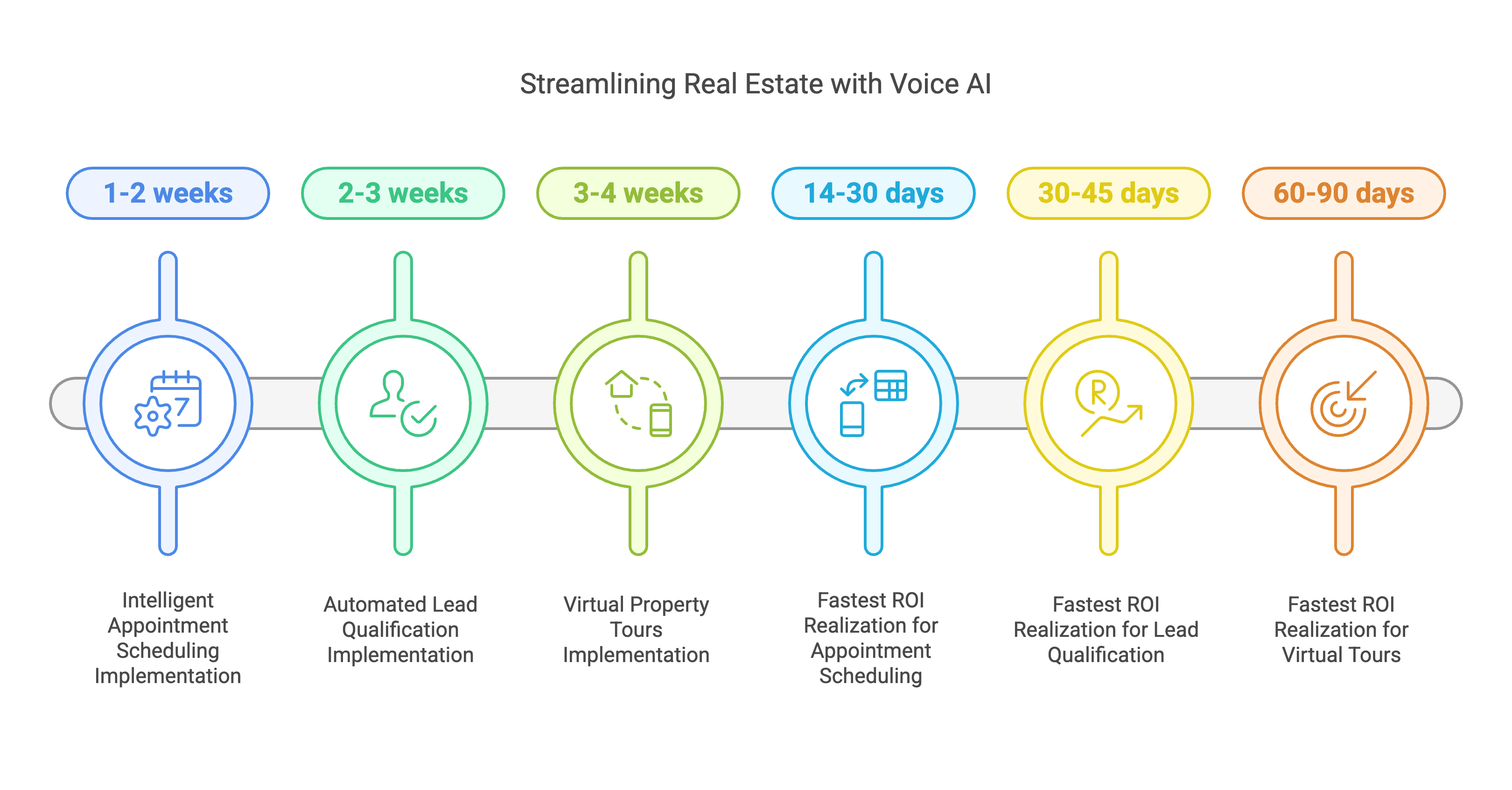
Implementation Timeline: 2-3 weeks Fastest ROI Realization: 30-45 days
For a step-by-step implementation guide, check out our detailed framework for voice AI client onboarding.
2. Virtual Property Tours
ROI Metrics:
43% increase in remote property viewings
28% higher engagement rates compared to text-based descriptions
22% reduction in time-to-sale for properties with AI voice tours
Voice AI can transform static property listings into engaging virtual tours, allowing potential buyers to "walk through" properties and ask questions about specific features. This technology bridges the gap between online listings and in-person viewings, significantly expanding a property's reach.
Implementation Timeline: 3-4 weeks Fastest ROI Realization: 60-90 days
3. Intelligent Appointment Scheduling
ROI Metrics:
87% reduction in scheduling conflicts
64% decrease in no-show appointments
24% increase in total showings scheduled
Voice AI systems excel at managing complex scheduling requirements by integrating with agents' calendars, checking availability in real-time, and handling appointment confirmations and reminders. This eliminates the back-and-forth typically required for scheduling property viewings.
Implementation Timeline: 1-2 weeks Fastest ROI Realization: 14-30 days
Healthcare: Enhancing Patient Care While Reducing Costs
1. Patient Follow-up and Monitoring
ROI Metrics:
28% reduction in hospital readmission rates
41% improvement in medication adherence
$318 average savings per patient in prevented complications
Voice AI agents can conduct regular check-ins with patients after discharge, asking about symptoms, medication adherence, and recovery progress. These systems can flag concerning responses for immediate human follow-up, creating an efficient triage system that significantly reduces readmission rates.
Implementation Timeline: 4-6 weeks Fastest ROI Realization: 90-120 days
2. Appointment Management and Reduction of No-Shows
ROI Metrics:
67% reduction in missed appointments
$140 average savings per prevented no-show
23% increase in available appointment slots
Healthcare facilities lose billions annually due to missed appointments. Voice AI can dramatically reduce no-show rates through personalized reminders, rescheduling assistance, and transportation coordination. The system can also handle cancellations and automatically fill vacated slots.
Implementation Timeline: 2-3 weeks Fastest ROI Realization: 30-45 days
3. Insurance Verification and Pre-Authorization
ROI Metrics:
81% reduction in administrative time spent on insurance verification
52% decrease in claim denials
$23,000 average monthly savings for mid-sized practices
One of the most time-consuming administrative tasks in healthcare is insurance verification and pre-authorization. Voice AI can automate this process by contacting insurance providers, navigating their systems, obtaining necessary authorizations, and updating patient records accordingly.
Implementation Timeline: 3-4 weeks Fastest ROI Realization: 45-60 days
Financial Services: Enhancing Security and Customer Experience
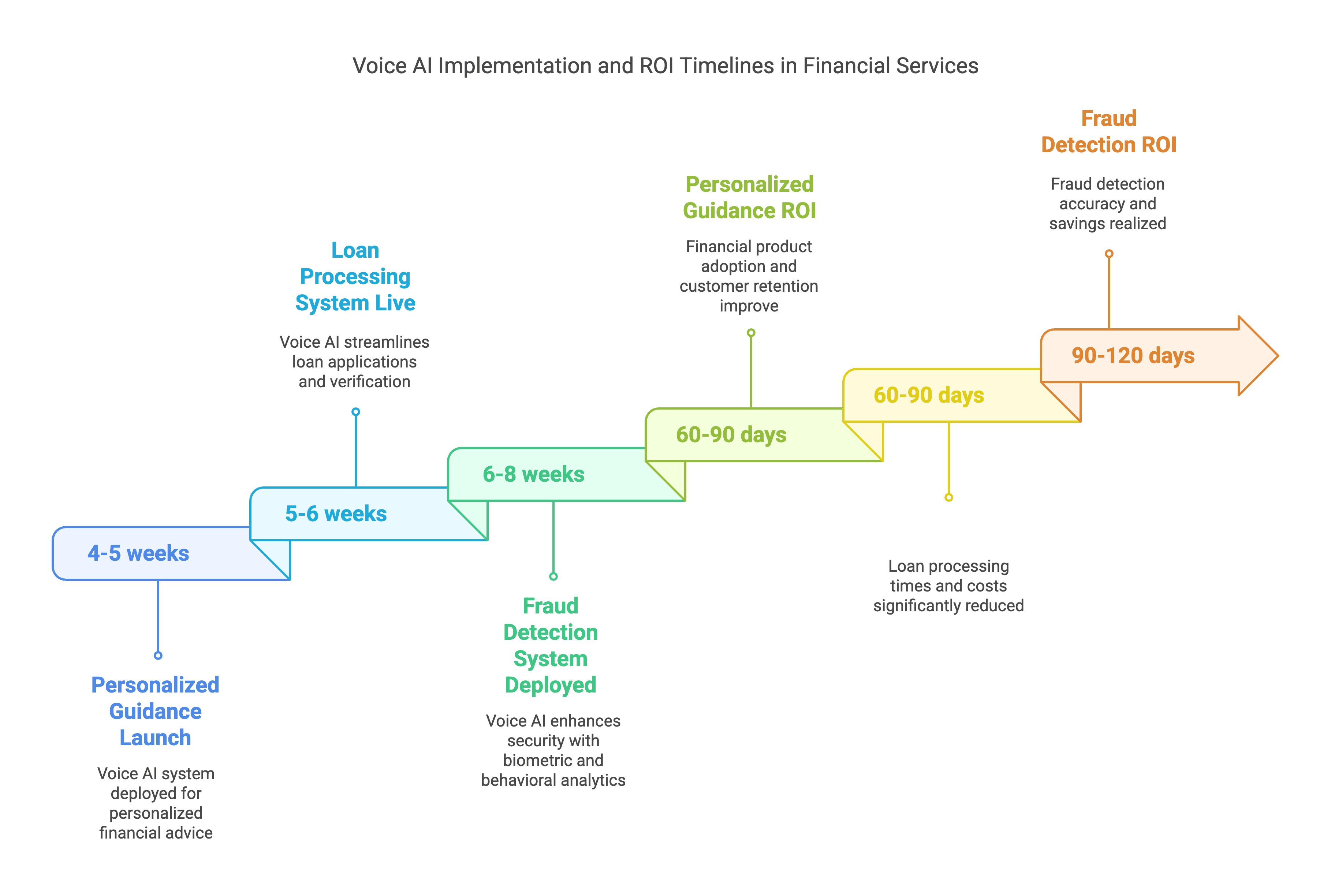
1. Fraud Detection and Prevention
ROI Metrics:
63% improvement in fraud detection accuracy
41% reduction in false positives
$1.2 million average annual savings for mid-sized financial institutions
Voice biometric authentication can verify a customer's identity with significantly higher accuracy than traditional methods. When combined with behavioral analytics and transaction pattern recognition, voice AI creates a powerful multi-layered security system that catches potential fraud before it occurs.
Implementation Timeline: 6-8 weeks Fastest ROI Realization: 90-120 days
2. Personalized Financial Guidance
ROI Metrics:
34% increase in financial product adoption
28% improvement in customer retention
47% higher customer satisfaction ratings
Voice AI can provide personalized financial advice based on customers' spending patterns, saving habits, and financial goals. By offering proactive recommendations for products like higher-yield savings accounts or more appropriate credit cards, these systems drive product adoption while building customer loyalty.
Implementation Timeline: 4-5 weeks Fastest ROI Realization: 60-90 days
3. Streamlined Loan Processing
ROI Metrics:
76% reduction in document processing time
39% decrease in loan origination costs
43% faster average loan approval times
The loan application process typically involves extensive paperwork and verification steps. Voice AI can guide applicants through this process, collect necessary information, verify employment and financial details, and keep applicants updated on their application status, significantly reducing processing times and costs.
Implementation Timeline: 5-6 weeks Fastest ROI Realization: 60-90 days
Retail and E-commerce: Boosting Sales and Customer Satisfaction
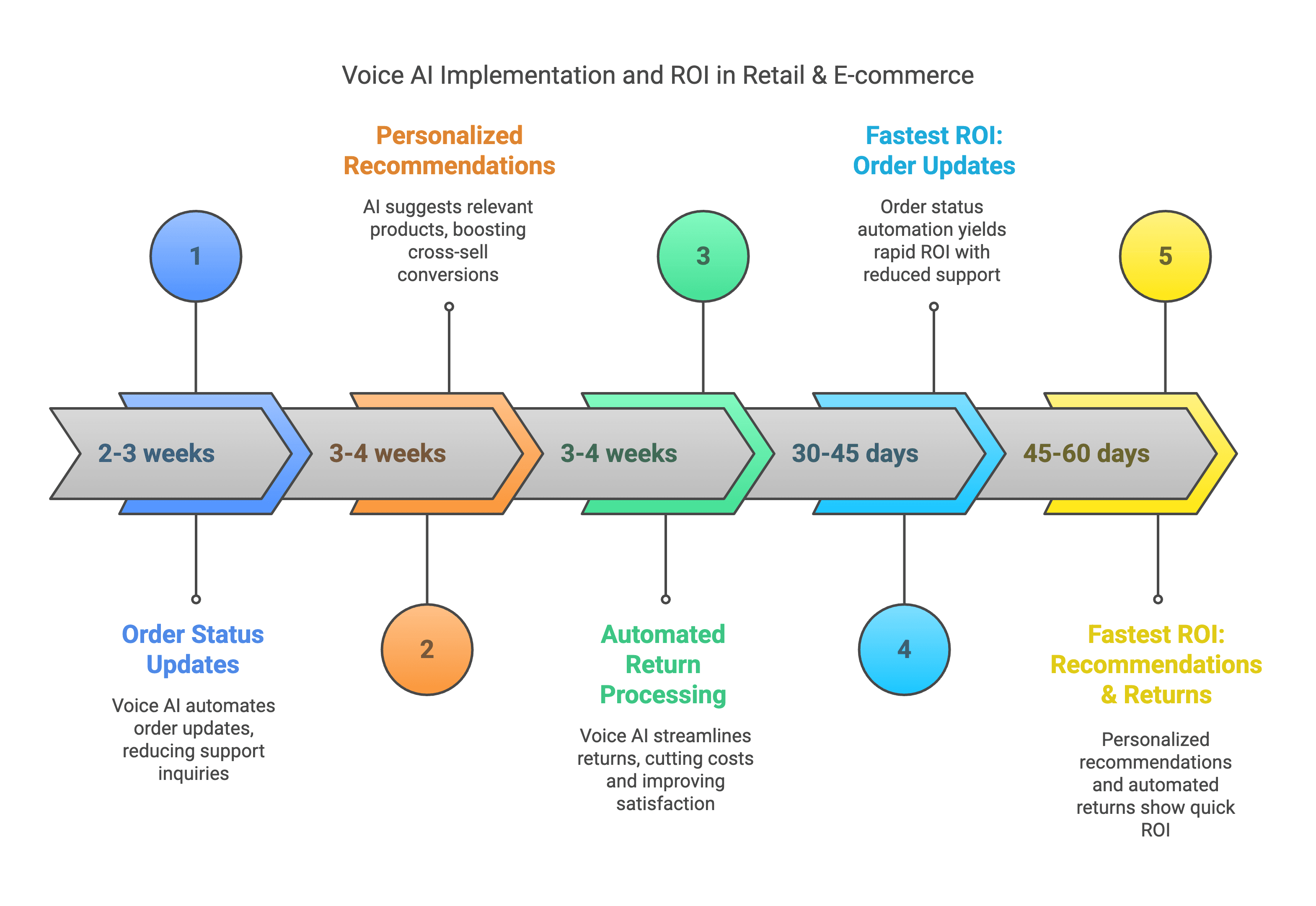
1. Proactive Order Status Updates
ROI Metrics:
82% reduction in "where is my order?" support inquiries
37% decrease in order cancellation rates
29% increase in repeat purchase rates
Voice AI can proactively contact customers with updates on their orders, from confirmation to shipping and delivery. This reduces customer anxiety and support inquiries while creating opportunities for additional engagement, such as recommending complementary products or offering early reorder reminders.
Implementation Timeline: 2-3 weeks Fastest ROI Realization: 30-45 days
2. Personalized Product Recommendations
ROI Metrics:
41% increase in cross-sell conversions
27% higher average order value
32% improvement in customer lifetime value
By analyzing purchase history, browsing behavior, and stated preferences, voice AI can make highly relevant product recommendations during customer interactions. These personalized suggestions significantly boost cross-selling and upselling success rates compared to generic recommendations.
Implementation Timeline: 3-4 weeks Fastest ROI Realization: 45-60 days
3. Automated Return Processing
ROI Metrics:
68% reduction in return processing costs
43% decrease in return processing time
31% improvement in customer satisfaction with returns process
Returns are a necessary but costly aspect of retail operations. Voice AI can streamline this process by initiating the return, providing shipping instructions, answering common questions, and processing refunds once items are received. This automation significantly reduces the administrative burden while improving the customer experience.
Implementation Timeline: 3-4 weeks Fastest ROI Realization: 45-60 days
Hospitality and Travel: Enhancing Guest Experiences
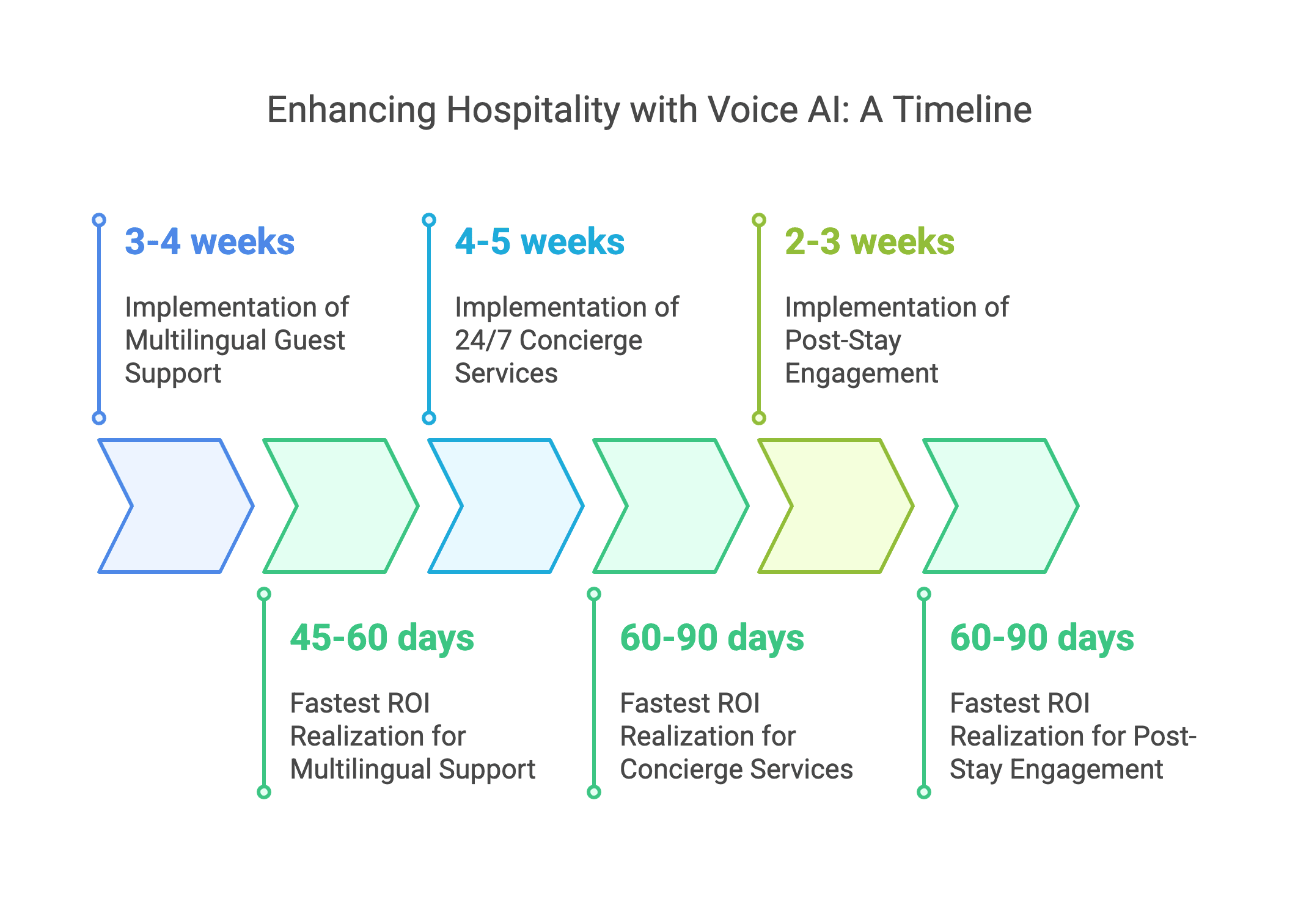
1. Multilingual Guest Support
ROI Metrics:
57% increase in international guest satisfaction
34% reduction in translation-related misunderstandings
26% higher service utilization from non-native speakers
Voice AI excels at providing consistent, high-quality support in multiple languages, eliminating the need for specialized language staff or third-party translation services. This capability is particularly valuable for hotels, resorts, and travel services with international clientele.
Implementation Timeline: 3-4 weeks Fastest ROI Realization: 45-60 days
2. 24/7 Concierge Services
ROI Metrics:
63% increase in amenity utilization
41% higher guest satisfaction scores
28% increase in additional service bookings
Voice AI concierge services can handle a wide range of guest requests around the clock, from restaurant recommendations and reservations to local attraction information and in-room service orders. This constant availability enhances the guest experience while driving additional revenue through service bookings.
Implementation Timeline: 4-5 weeks Fastest ROI Realization: 60-90 days
3. Post-Stay Engagement and Feedback Collection
ROI Metrics:
73% higher feedback response rates
31% increase in repeat bookings
42% improvement in online review scores
Voice AI can engage guests after their stay to collect detailed feedback, address any unresolved issues, and offer personalized incentives for future bookings. This proactive approach to guest relations significantly improves satisfaction metrics and increases repeat business rates.
Implementation Timeline: 2-3 weeks Fastest ROI Realization: 60-90 days
Implementing Voice AI Solutions for Clients
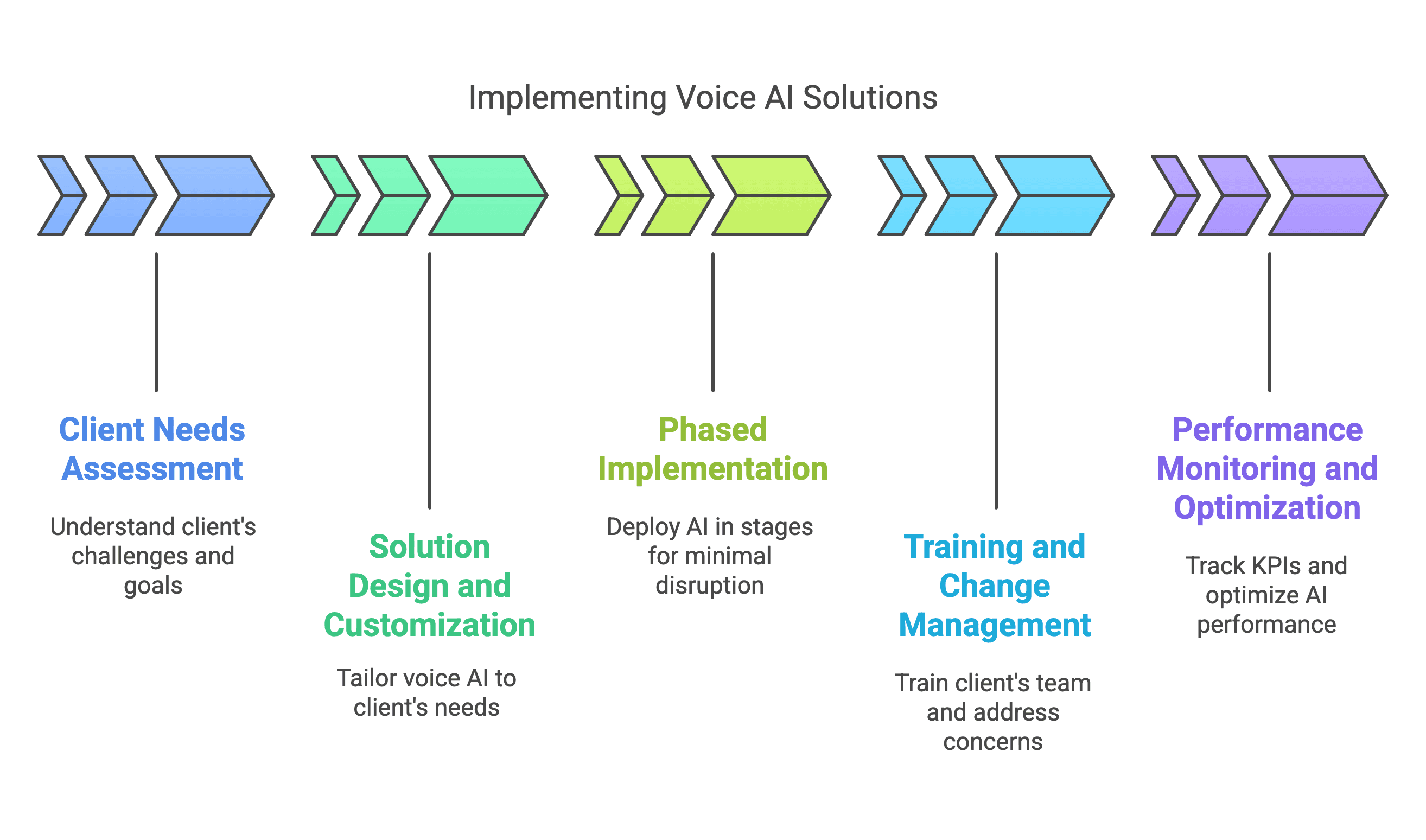
Successfully implementing these voice AI use cases requires a strategic approach that ensures seamless integration, optimal performance, and measurable results. Here's a proven framework for agencies to follow:
1. Client Needs Assessment
Begin by thoroughly understanding your client's specific challenges, goals, and existing processes. This foundation will guide the customization of your voice AI solution and establish clear success metrics aligned with business objectives.
2. Solution Design and Customization
Design a voice AI solution tailored to your client's unique requirements. This includes developing conversation flows, crafting voice personalities that align with the brand, and integrating the system with existing tools and databases.
For detailed integration guidance, see our comprehensive VAPI Voice API integration guide.
3. Phased Implementation
Rather than attempting a complete overhaul, implement voice AI in phases:
Phase 1: Deploy in a limited capacity for specific use cases
Phase 2: Analyze performance and refine based on real-world data
Phase 3: Scale successful implementations across the organization
This approach minimizes disruption while allowing for continuous improvement based on actual results.
4. Training and Change Management
Provide comprehensive training for your client's team members who will be working with the voice AI system. Address concerns about job security by emphasizing how AI will augment human capabilities rather than replace them.
5. Performance Monitoring and Optimization
Establish a robust monitoring system to track key performance indicators and identify opportunities for optimization. Regular reporting on ROI metrics keeps clients engaged and demonstrates the value of your services.
For a detailed onboarding framework, check out our guide on voice AI client onboarding.
Pitching Voice AI Solutions to Potential Clients
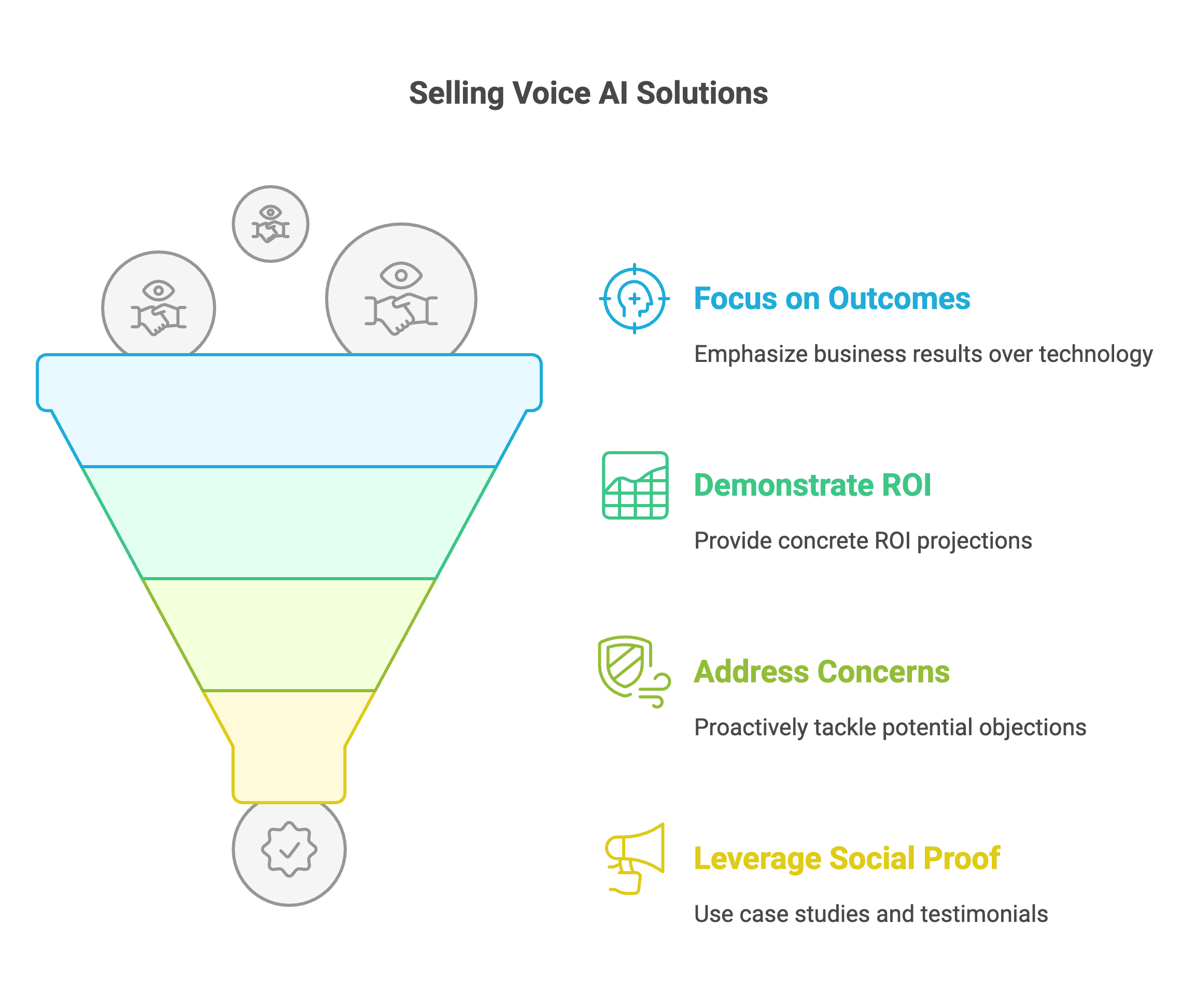
Successfully selling voice AI services requires more than just technical expertise-it demands a compelling narrative that addresses client concerns and highlights tangible benefits. Here's a proven approach:
1. Focus on Business Outcomes, Not Technology
While the technology behind voice AI is fascinating, clients are primarily interested in business results. Center your pitch on specific outcomes such as:
Cost reduction and operational efficiency
Revenue generation and growth opportunities
Customer experience enhancement and loyalty building
Competitive advantage and market differentiation
2. Demonstrate Clear ROI
Provide concrete ROI projections based on industry benchmarks and case studies. Use our Voice AI ROI Calculator to create customized projections for each prospect.
3. Address Common Concerns Proactively
Anticipate and address potential objections:
Cost concerns: Demonstrate how upfront investment is quickly recovered through operational savings and revenue growth
Integration complexity: Explain your phased approach and seamless integration methodology
Staff resistance: Outline your change management strategy and training programs
Data security: Detail the robust security measures protecting sensitive information
4. Leverage Social Proof
Include relevant case studies and testimonials from similar clients who have successfully implemented voice AI solutions. Concrete examples of real-world success are powerful persuasion tools.
Measuring Voice AI ROI for Your Clients
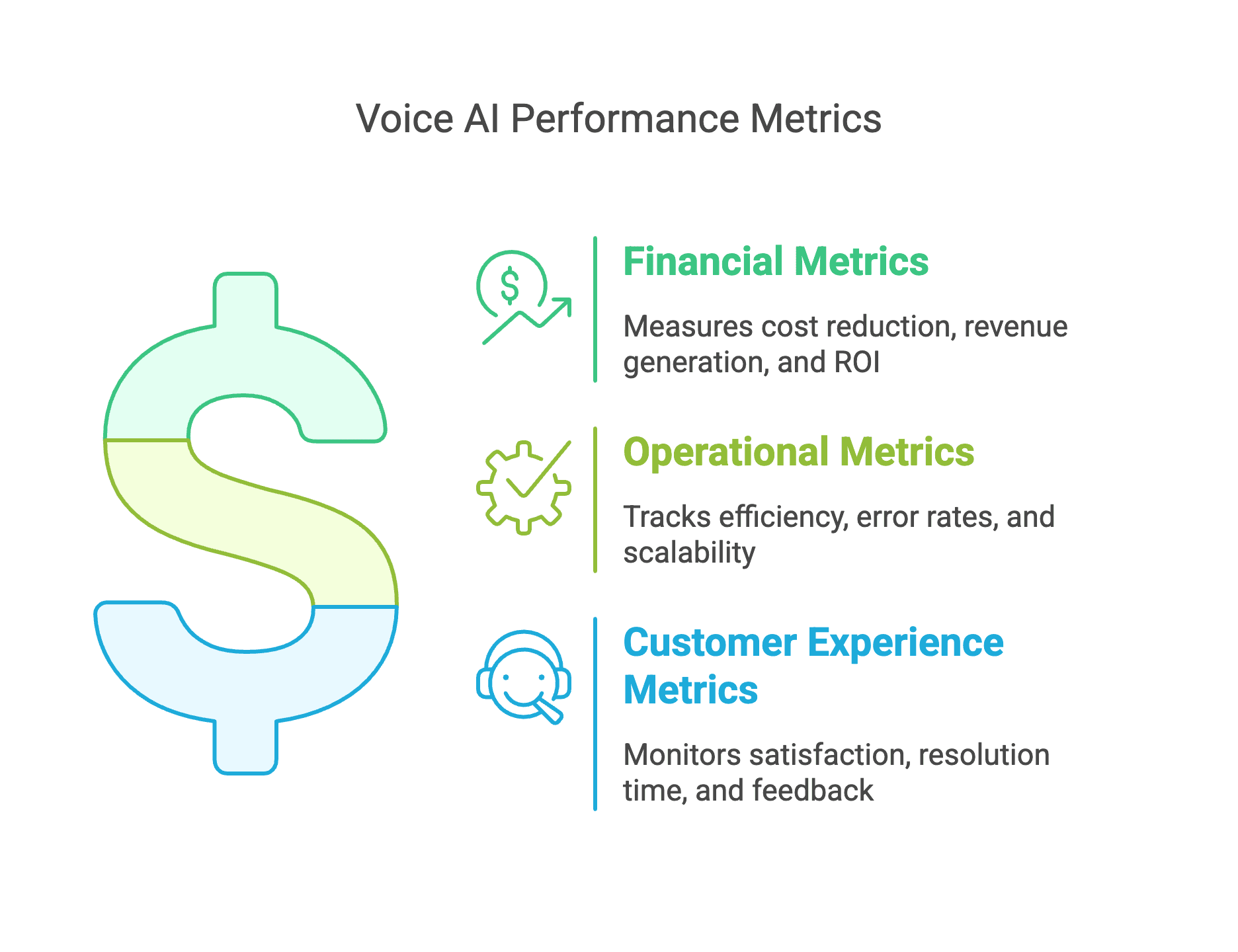
To ensure ongoing client satisfaction and contract renewals, agencies must establish clear metrics for measuring voice AI performance. Here are the key areas to monitor:
1. Financial Metrics
Cost Reduction: Track direct savings from automating processes previously handled by human agents
Revenue Generation: Measure additional sales and upsells directly attributable to voice AI interactions
Customer Lifetime Value: Monitor increases in repeat business and average transaction values
Return on Investment: Calculate the overall ROI using our comprehensive ROI measurement framework
2. Operational Metrics
Efficiency Improvements: Track reductions in processing times and labor hours
Error Rates: Monitor decreases in mistakes and required corrections
Resolution Rates: Measure the percentage of inquiries successfully resolved by voice AI
Scalability Performance: Assess the system's ability to handle volume increases
3. Customer Experience Metrics
Satisfaction Scores: Track improvements in CSAT, NPS, and other satisfaction metrics
Resolution Time: Measure decreases in time-to-resolution for customer inquiries
Channel Shifting: Monitor reductions in traffic to more expensive service channels
Customer Feedback: Collect and analyze qualitative feedback about voice AI interactions
Frequently Asked Questions About Voice AI for Agencies
Q- How long does it typically take to implement a voice AI solution for clients? |
A- Implementation timelines vary based on use case complexity, integration requirements, and customization needs. Simple applications like appointment scheduling can be deployed in as little as 1-2 weeks, while more complex solutions like multilingual customer support might require 4-6 weeks. Our onboarding framework provides detailed timelines for different use cases. |
Q- What kind of ROI can clients expect from voice AI implementations? |
A- ROI varies by industry and use case, but most implementations deliver returns within 90 days. Cost savings typically range from 30-70% compared to human-only processes, while revenue enhancements average 15-40% for sales-focused applications. For precise projections, use our Voice AI ROI Calculator. |
Q- How do voice AI solutions integrate with clients' existing systems? |
A-VoiceAIWrapper provides seamless integration with most CRM systems, communication platforms, and business tools through our robust API framework. Our integration guide details specific integration pathways for popular business systems. |
Q-How accurate are voice AI systems in understanding different accents and dialects? |
A-Modern voice AI systems achieve over 95% accuracy across major languages and dialects. VoiceAIWrapper's technology continuously improves through machine learning, adapting to regional speech patterns and industry-specific terminology over time. |
Q- What happens if the voice AI can't resolve a customer inquiry? |
A- Our voice AI solutions include intelligent escalation protocols that smoothly transfer complex or sensitive issues to human agents. The system provides the agent with a complete conversation transcript and relevant customer data to ensure a seamless transition. |
Q- How do clients maintain control over their voice AI implementations? |
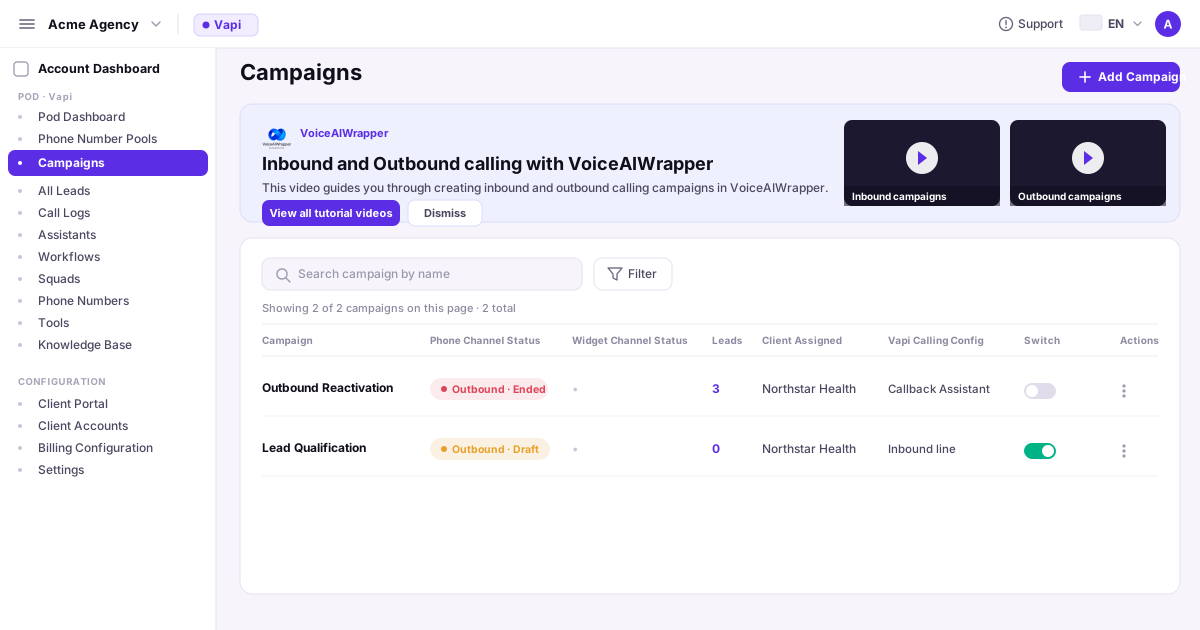
A-VoiceAIWrapper provides an intuitive management dashboard where clients can monitor performance, adjust conversation flows, and update information in real-time without technical expertise. Agencies can offer this as a managed service or train clients to self-manage. |
Q- How is customer data protected in voice AI interactions? |
A- All voice interactions are encrypted using bank-grade security protocols, and data storage complies with regulations like GDPR, HIPAA, and CCPA. Our systems include robust authentication mechanisms to protect sensitive information. |
Q-Ready to Transform Your Agency Offerings with Voice AI? |
A-Voice AI represents an unprecedented opportunity for agencies to deliver high-value, high-ROI solutions to clients across industries. By leveraging VoiceAIWrapper's comprehensive platform, you can quickly implement and scale voice AI applications without deep technical expertise or extensive development resources. |
Ready to get started?
Sign up for VoiceAIWrapper today and access our complete suite of voice AI tools, including white-label options for agency deployment. Our team will guide you through the implementation process and help you identify the most profitable voice AI opportunities for your specific client base.
For a personalized consultation on how to integrate voice AI into your agency offerings, schedule a demo with our team today.
Note: This blog post is part of our agency resource series. For more insights on growing your agency with AI-powered solutions, check out our guides on calculating voice AI ROI, VAPI integration, and client onboarding.
Like this article? Share it.