Voice AI Integration Challenges

Voice AI Integration Challenges

Deploying voice AI technology is one of the most transformative steps a business can take. The promise is compelling intelligent, conversational automation that handles client interactions at scale, reduces pressure on human teams, and delivers a seamless experience around the clock.

VoiceAIWrapper Founder Image

Written By:

Raj

|

Published on:

March 25, 2026

|

Updated on:

March 25, 2026

March 25, 2026

voice-ai-integration-challange-and-how-to-solve-them-vapi-logo-and-elevenlabs-logo-voiceaiwrapper.
On this Page

Voice AI in the Real World: Integration Challenges Experts Encountered and How They Solved Them for Their Clients

Deploying voice AI technology is one of the most transformative steps a business can take. The promise is compelling intelligent, conversational automation that handles client interactions at scale, reduces pressure on human teams, and delivers a seamless experience around the clock. But between that promise and a fully functioning, client-ready implementation lies a stretch of territory that even the most technically prepared teams find unexpectedly demanding: the integration process.

Voice AI does not exist in a vacuum. For it to deliver real value, it needs to connect cleanly with the systems, workflows, and data environments that a business already depends on CRMs, booking platforms, helpdesk software, telephony infrastructure, databases, and more. Every one of those connection points is an opportunity for friction. And in the real world, friction has a way of showing up in places that no amount of pre-project planning fully anticipates. Legacy systems that were never designed to communicate with modern AI platforms. API behaviours that differ from documentation. Client environments that are far more complex and inconsistent than they appeared at the scoping stage. Edge cases that only reveal themselves under live conditions with real users.
voice ai integration easy with voiceaiwrapper.


These are not rare or exotic problems. They are the everyday reality of professionals who are actively building and deploying voice AI solutions for their clients. And the way these challenges are identified, diagnosed, and resolved is what ultimately separates implementations that go live smoothly and perform reliably from those that drag on, disappoint clients, and erode trust in the technology itself.

What makes integration experience so valuable is that it is almost entirely non-transferable through theory alone. You cannot fully appreciate the complexity of connecting a voice AI platform to a decades-old telephony system, or the patience required to resolve data formatting mismatches between two otherwise well-documented tools, until you have actually worked through it. That practical, in-the-trenches knowledge is what we set out to gather.

We reached out to developers, agency operators, and AI solution providers who have navigated real voice AI integration challenges on behalf of their clients, and asked them one direct question:

"What was one integration challenge you encountered with voice AI technology? How did you solve it for your clients?"

The responses we received were detailed, technically grounded, and genuinely instructive. From bridging compatibility gaps between voice AI platforms and legacy CRM systems, to resolving latency issues introduced by middleware layers, to managing authentication conflicts across multi-platform environments the solutions these experts developed and shared here represent some of the most practical, hard-won knowledge available on the subject.

Whether you are currently working through an integration challenge of your own, preparing for an upcoming voice AI deployment, or simply want to build a clearer picture of what real-world implementation actually involves, the expert insights that follow offer something far more useful than theory. Here is what they had to say.

Voice AI implementation presents distinct technical and operational hurdles that can derail even well-planned projects. This article breaks down nine common integration challenges and provides proven solutions drawn from industry experts who have successfully deployed voice AI systems at scale. From managing latency issues to ensuring HIPAA compliance, these strategies help practitioners avoid costly mistakes and deliver reliable voice AI solutions to their clients.

  • Shape Text For Natural Speech

  • Escalate Smartly To Preserve Trust

  • Deliver Turnkey Integration Without Vendor Lock

  • Engineer Around Latency Constraints

  • Bridge Legacy Systems With Middleware

  • Match Patient Intents To EHR Records

  • Enforce HIPAA With Private Cloud

  • Normalize Listings And Win Voice Queries

  • Guarantee Post-Call Reliability And Attribution
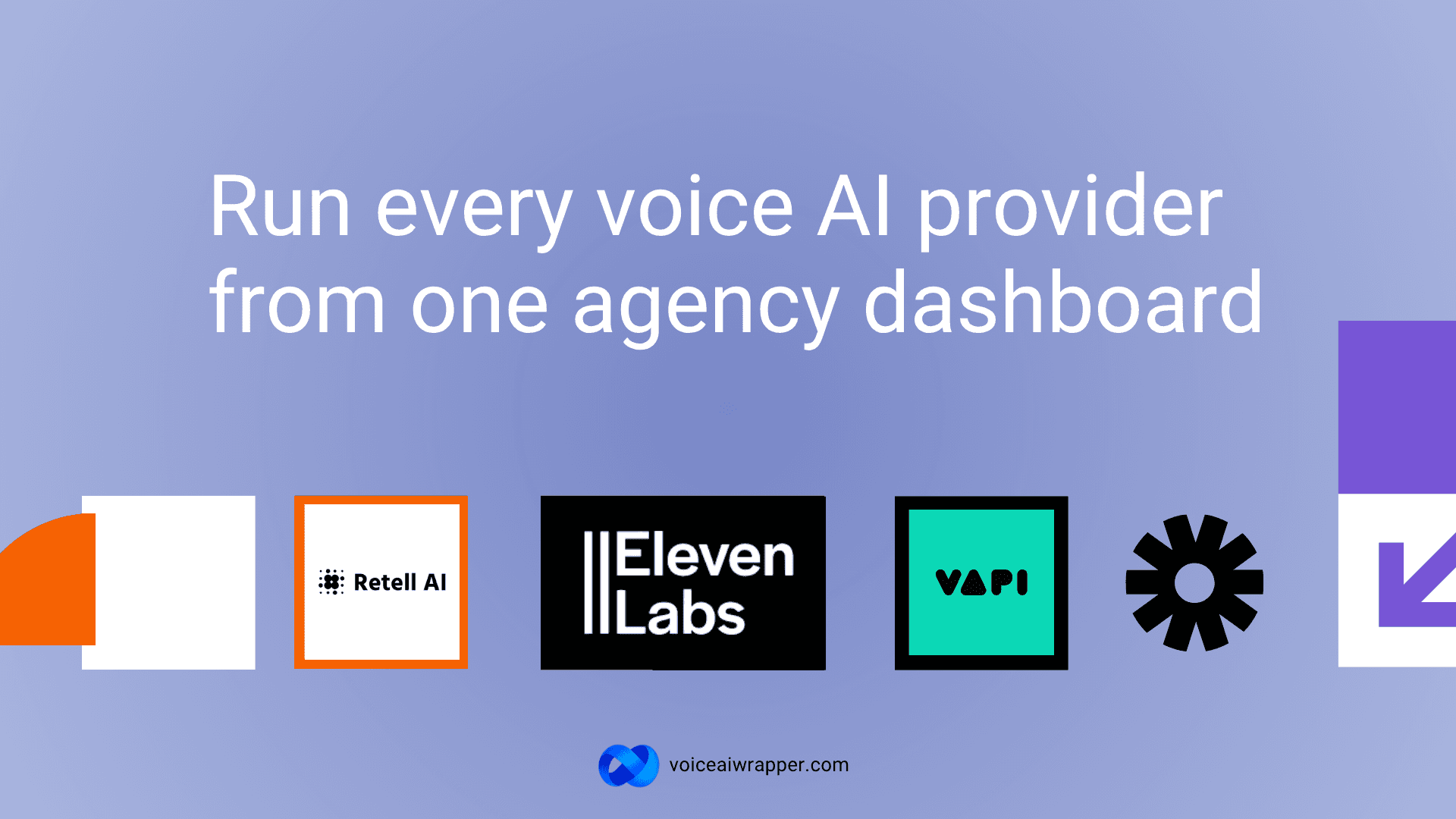
vapi-retell-bolna-elevenlabs-logos-use-multiple-voice-ai-providers-headline-voiceaiwrapper.


Shape Text For Natural Speech

The hardest part of integrating voice AI for us wasn't the voice quality. That part gets a lot of attention, and the technology has improved a lot. The real challenge showed up once we started feeding it the kind of content our users actually upload.

Listening converts academic papers and dense articles into audio, and those documents are messy. Citations everywhere, equations, footnotes, weird formatting from PDFs. When we first connected voice models to the pipeline, the output technically worked... but it sounded bizarre in places. The voice would read citation brackets out loud, pause in odd spots, or try to pronounce things like inline formulas as if they were words.

At first we kept trying different voice models, thinking the problem was the speech engine. Eventually we realized the real issue was the input. These models are great readers, but they assume the text they receive already makes sense as spoken language.

The fix was building a preprocessing layer that essentially "translates" academic formatting into something more conversational before the voice model ever sees it. Citations get handled differently, equations are skipped or summarized, long reference sections are removed entirely. It's less about generating audio and more about deciding what a human narrator would realistically read out loud.

Once we did that, the voices suddenly sounded much more natural — even using the same models as before.

It was a good reminder that with voice AI, the quality of the text pipeline matters just as much as the quality of the voice itself. If the input isn't shaped for speech, even the best model will sound awkward.

Derek Pankaew, CEO & Founder, Listening.com

Escalate Smartly To Preserve Trust

A challenge in integrating voice AIs is releasing control when customers go off-script. Most integration challenges occur when customer support is needed, especially when a customer is angry, has a billing question, or has three questions at once. If the voice AI is unable to detect the transition quickly enough, then the customer starts to repeat themselves or get stuck in a loop. This leads to a loss of trust in the system.

We resolved this challenge by narrowing down the escalation points instead of providing AI support for everything. We created explicit triggers to escalate the call from an AI to a live agent (or other medium) based on criteria such as repeated attempts to achieve resolution, use of negative verbiage, specific business account issue, urgency or payment dispute. Additionally, we provided the calling agent with a call summary, caller ID, and transcripts of parts of the conversation before they took the call so they did not need to repeat the conversation. Typically, this improves the handoff process and decreases abandonment and repeat attempts to resolve an issue; therefore providing the customer an improved mix between automation and human support.

Dennis Holmes, CEO, Answer Our Phone

Deliver Turnkey Integration Without Vendor Lock

When I was first building BrokerNest AI, one of the challenges I came across on a consistent basis was that nobody wanted to change their CRM since it can be heavily disruptive to their business. Most AI platforms that existed either required you to switch over to their infrastructure or have a technical knowledge of how to connect it to an existing tech stack.

We quickly decided that the solution needed to be "done-for-you" software that not only integrates into the tools Realtors, Brokers, and developers already use, but it also has to be turnkey in that there's no prompting or coding required. Able to be up and running in less than a day (nobody wants to spend days learning a new system), BrokerNest talks to the CRM and lays out everything in a user friendly "mission control" style ecosystem which tracks and displays KPIs in real time so that user sees exactly what's happening.

Mitch Parker, Founder, BrokerNest Ai
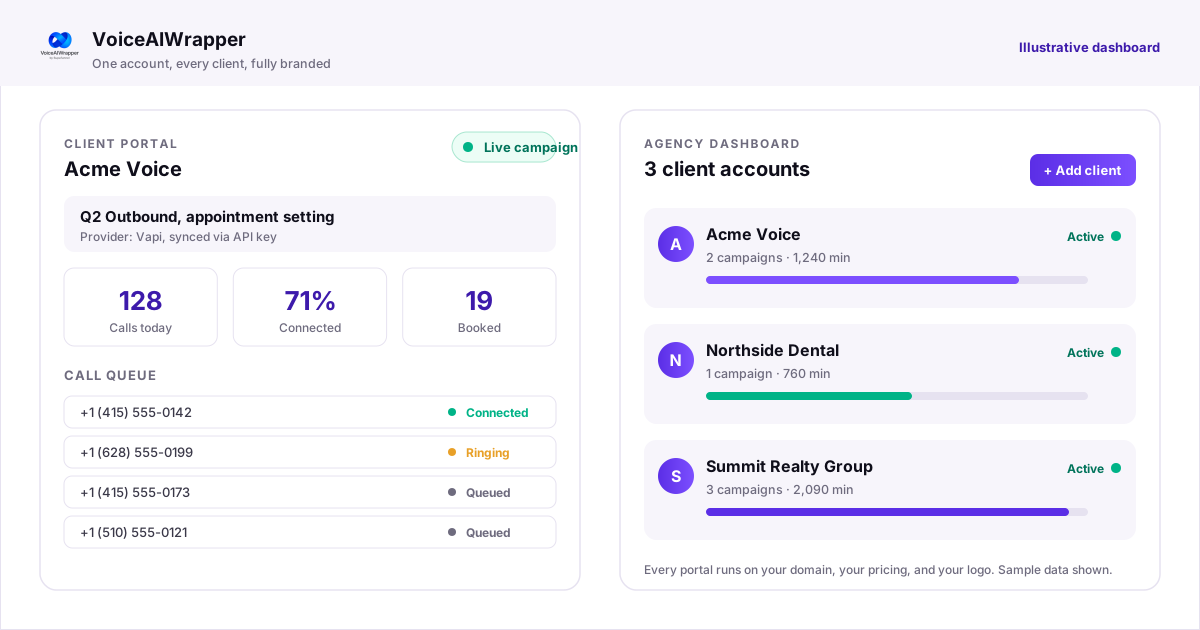
Voice AI integration challenges blog CTA with elements and heading Eliminate Integration Delays and Launch Voice AI Faster | VoiceAIWrapper.


Engineer Around Latency Constraints

The trickiest integration challenge we hit was connecting voice AI to a client's existing CRM and ticketing system in real time during live calls. The client was a property management company that wanted their voice AI to pull tenant information, check maintenance request status, and create new tickets, all while the caller was still on the line. The problem was their CRM had API rate limits and response times that were too slow for a live voice conversation.

We solved it by building a caching layer that pre-loaded the most frequently accessed tenant data into a Redis instance, so the voice AI could retrieve information in under 100ms instead of waiting 2-3 seconds for the CRM API to respond. For creating new tickets, we implemented an async queue system where the voice AI confirmed the details with the caller, then the ticket creation happened in the background after the call ended. The client got a confirmation SMS within 30 seconds of hanging up. The key lesson was that voice AI integrations need to be designed around the constraints of real-time conversation, not around the capabilities of the backend systems. You have to engineer around latency rather than waiting for your legacy systems to speed up.

Shehar Yar, CEO, Software House

Bridge Legacy Systems With Middleware

One major integration challenge we faced was aligning the voice AI with legacy CRM systems that weren't built to handle real-time conversational data. I call this the "data handshake problem." Without seamless data flow, the AI couldn't access customer history, which led to frustratingly generic responses.

We solved it by building a lightweight middleware layer that translated between the AI platform and the legacy system. This allowed the AI to pull context dynamically from previous interactions, preferences, and notes without requiring a full backend overhaul. For clients, this meant the AI could provide personalized responses from day one, improving both efficiency and customer satisfaction.

The takeaway: integration hurdles often aren't about the AI itself; they're about connecting it intelligently to existing workflows so it can truly add value without disruption.

Omer Malik, CEO, ORM Systems

Match Patient Intents To EHR Records

At Blink Agency, as Chief Client & Operations Officer, I oversee AI integrations via our proprietary HIPAA-compliant platform for healthcare growth. One challenge was syncing voice AI assistants like Alexa for appointment reminders with patient portals, where natural healthcare queries often mismatched EHR data formats.

For Dr. Ann Thomas's practice, voice searches for "internal medicine doctor near me" triggered generic responses, missing high-intent patients. We solved it by optimizing our AI platform with natural language keywords and CDP integration, lifting appointment attendance 10% via automated voice confirmations—helping hit 92% capacity and 116 new patients in 90 days.

Madeline Jack, Chief Client & Operations Officer, Blink Agency
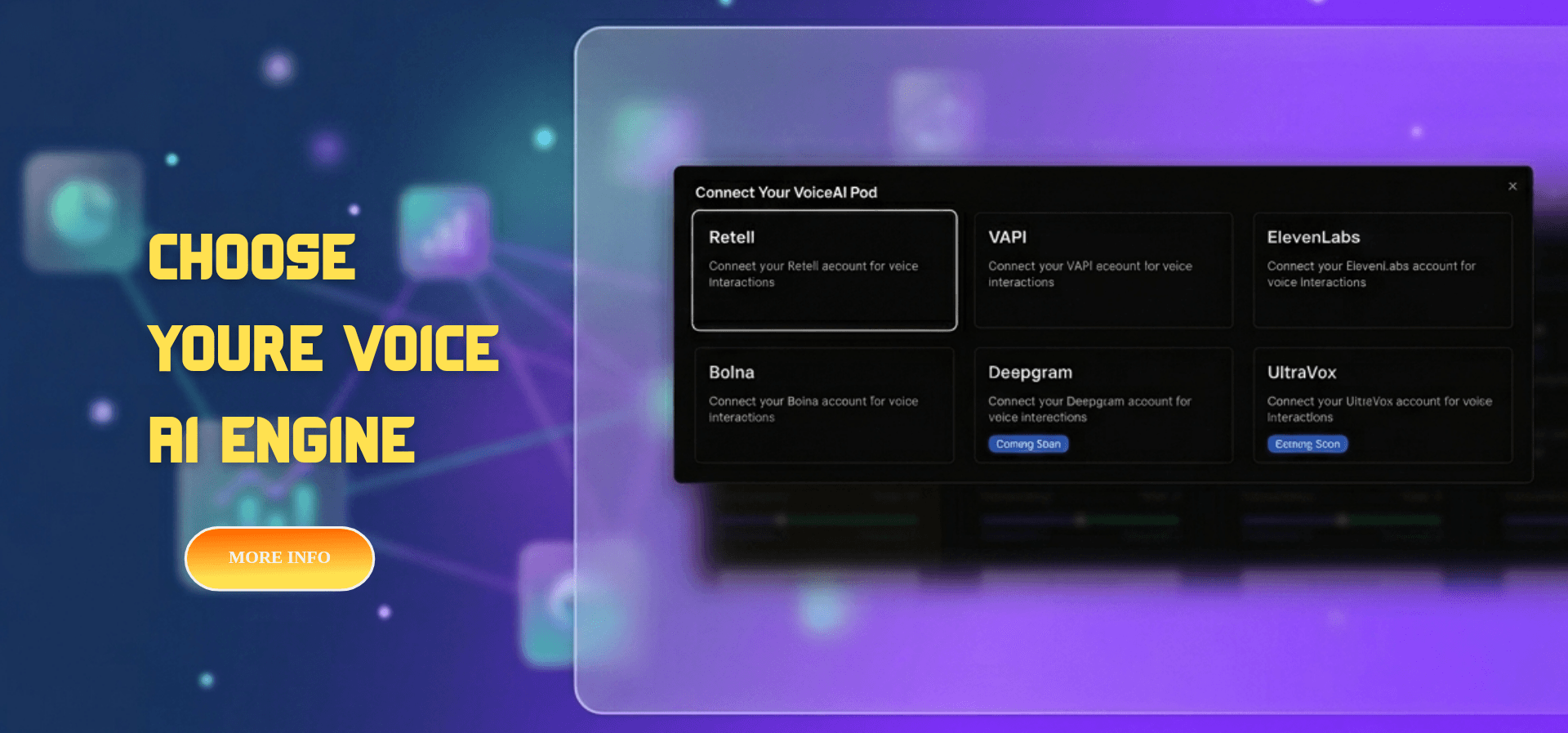
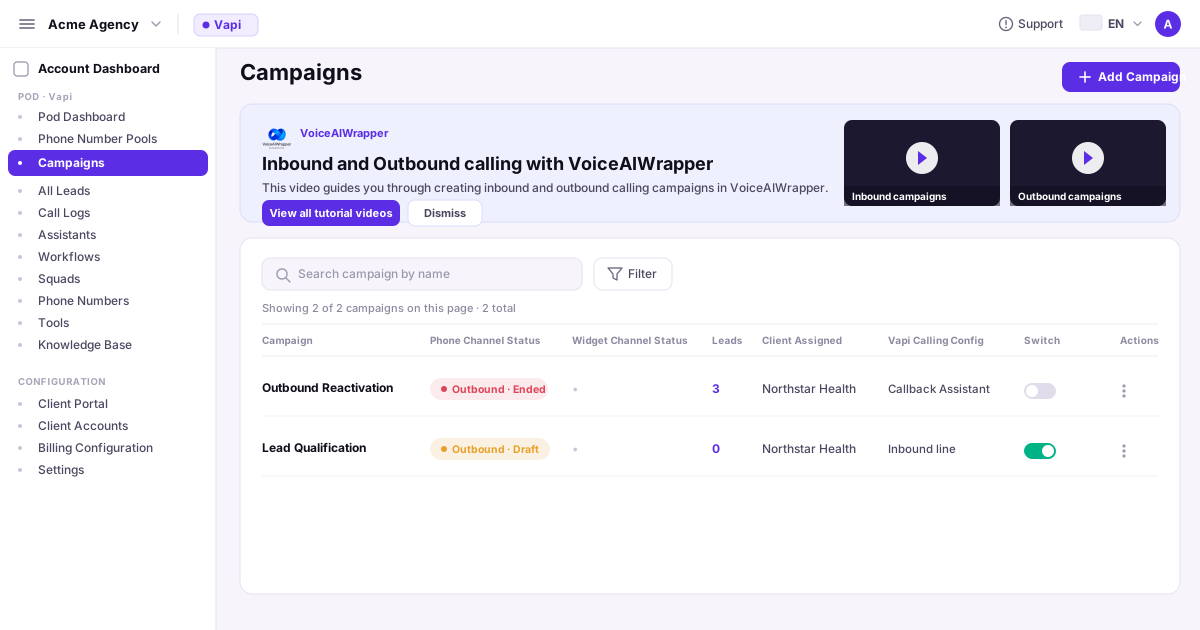
Voice AI integration challenges blog body with VoiceAIWrapper product screenshot showing Vapi Retell ElevenLabs Bolna and Ultravox engine selection | VoiceAIWrapper.


Enforce HIPAA With Private Cloud

With over 17 years in IT and a decade in cybersecurity, I've found the biggest hurdle in voice AI integration is maintaining strict regulatory compliance, specifically HIPAA, for my medical and dental clients. When we integrated voice-driven patient intake, the primary challenge was preventing Protected Health Information (PHI) from being cached on non-compliant, external processing servers.

We solved this by deploying Microsoft Azure AI services configured with private endpoints and strict data residency controls. This ensured that every voice interaction remained encrypted within the client's secure cloud perimeter, satisfying both HIPAA and AICPA SOC2 standards for data integrity.

By bridging the gap between automated scheduling and high-level security, the practice reduced manual administrative tasks by 30%. This approach provides the "meaningful insights" my customers need while ensuring their security never sleeps.

Ryan Miller, Managing Partner, Sundance Networks

Normalize Listings And Win Voice Queries

As CEO of CI Web Group, I've led AI integrations for HVAC and plumbing contractors, building 600-page voice-optimized platforms in just 90 days to capture conversational queries.

One integration challenge was inconsistent business data across GBP, websites, and directories, causing voice assistants like Google Assistant to skip listings or deliver outdated info for queries like "HVAC repair near me open now."

We solved it with AI-driven audits to enforce NAP consistency and added schema markup for structured FAQs in natural language. An electrical client gained featured snippets for 12 local queries, boosting voice-driven traffic by 35% in two months.

Jennifer Bagley, CEO, CI Web Group

Guarantee Post-Call Reliability And Attribution

One nasty integration challenge was getting the voice agent to reliably "do something" after the call--create/update the lead, trigger follow-ups, and log attribution--without double-creating records or silently failing when a CRM field/option changed. When you're running accountable acquisition at scale (I've managed $300M+ in spend), a voice bot that can't close the loop breaks your measurement and your revenue ops.

I solved it by treating the voice agent like a production system: strict schemas for every extracted field (intent, product, compliance flags, language, budget, timeline), idempotency keys per caller/session to prevent duplicates, and a queued middleware layer that retries + alerts on failures instead of "fire-and-forget." We also wrote validation rules that block bad writes (e.g., missing state for regulated flows) and fall back to a human task with the full transcript + call summary.

Example: for a financial services client (StoneX / FOREX.com style environment), we wired the agent into the CRM + analytics so every call gets tagged by campaign and routed correctly, while enforcing controlled phrasing and required disclosures before an appointment is booked. That gave leadership clean reporting on which channels and keywords drive qualified calls, and it let the team scale call handling 24/7 without adding headcount.

Renzo Proano, Team Principal | Enterprise Growth Partner, Berelvant AI

Voice AI integration challenges blog CTA with heading Ready to Launch Voice AI Without Integration Headaches | VoiceAIWrapper.

Voice AI in the Real World: Integration Challenges Experts Encountered and How They Solved Them for Their Clients

Deploying voice AI technology is one of the most transformative steps a business can take. The promise is compelling intelligent, conversational automation that handles client interactions at scale, reduces pressure on human teams, and delivers a seamless experience around the clock. But between that promise and a fully functioning, client-ready implementation lies a stretch of territory that even the most technically prepared teams find unexpectedly demanding: the integration process.

Voice AI does not exist in a vacuum. For it to deliver real value, it needs to connect cleanly with the systems, workflows, and data environments that a business already depends on CRMs, booking platforms, helpdesk software, telephony infrastructure, databases, and more. Every one of those connection points is an opportunity for friction. And in the real world, friction has a way of showing up in places that no amount of pre-project planning fully anticipates. Legacy systems that were never designed to communicate with modern AI platforms. API behaviours that differ from documentation. Client environments that are far more complex and inconsistent than they appeared at the scoping stage. Edge cases that only reveal themselves under live conditions with real users.

voice ai integration easy with voiceaiwrapper.


These are not rare or exotic problems. They are the everyday reality of professionals who are actively building and deploying voice AI solutions for their clients. And the way these challenges are identified, diagnosed, and resolved is what ultimately separates implementations that go live smoothly and perform reliably from those that drag on, disappoint clients, and erode trust in the technology itself.

What makes integration experience so valuable is that it is almost entirely non-transferable through theory alone. You cannot fully appreciate the complexity of connecting a voice AI platform to a decades-old telephony system, or the patience required to resolve data formatting mismatches between two otherwise well-documented tools, until you have actually worked through it. That practical, in-the-trenches knowledge is what we set out to gather.

We reached out to developers, agency operators, and AI solution providers who have navigated real voice AI integration challenges on behalf of their clients, and asked them one direct question:

"What was one integration challenge you encountered with voice AI technology? How did you solve it for your clients?"

The responses we received were detailed, technically grounded, and genuinely instructive. From bridging compatibility gaps between voice AI platforms and legacy CRM systems, to resolving latency issues introduced by middleware layers, to managing authentication conflicts across multi-platform environments the solutions these experts developed and shared here represent some of the most practical, hard-won knowledge available on the subject.

Whether you are currently working through an integration challenge of your own, preparing for an upcoming voice AI deployment, or simply want to build a clearer picture of what real-world implementation actually involves, the expert insights that follow offer something far more useful than theory. Here is what they had to say.

Voice AI implementation presents distinct technical and operational hurdles that can derail even well-planned projects. This article breaks down nine common integration challenges and provides proven solutions drawn from industry experts who have successfully deployed voice AI systems at scale. From managing latency issues to ensuring HIPAA compliance, these strategies help practitioners avoid costly mistakes and deliver reliable voice AI solutions to their clients.

  • Shape Text For Natural Speech

  • Escalate Smartly To Preserve Trust

  • Deliver Turnkey Integration Without Vendor Lock

  • Engineer Around Latency Constraints

  • Bridge Legacy Systems With Middleware

  • Match Patient Intents To EHR Records

  • Enforce HIPAA With Private Cloud

  • Normalize Listings And Win Voice Queries

  • Guarantee Post-Call Reliability And Attribution

vapi-retell-bolna-elevenlabs-logos-use-multiple-voice-ai-providers-headline-voiceaiwrapper.


Shape Text For Natural Speech

The hardest part of integrating voice AI for us wasn't the voice quality. That part gets a lot of attention, and the technology has improved a lot. The real challenge showed up once we started feeding it the kind of content our users actually upload.

Listening converts academic papers and dense articles into audio, and those documents are messy. Citations everywhere, equations, footnotes, weird formatting from PDFs. When we first connected voice models to the pipeline, the output technically worked... but it sounded bizarre in places. The voice would read citation brackets out loud, pause in odd spots, or try to pronounce things like inline formulas as if they were words.

At first we kept trying different voice models, thinking the problem was the speech engine. Eventually we realized the real issue was the input. These models are great readers, but they assume the text they receive already makes sense as spoken language.

The fix was building a preprocessing layer that essentially "translates" academic formatting into something more conversational before the voice model ever sees it. Citations get handled differently, equations are skipped or summarized, long reference sections are removed entirely. It's less about generating audio and more about deciding what a human narrator would realistically read out loud.

Once we did that, the voices suddenly sounded much more natural — even using the same models as before.

It was a good reminder that with voice AI, the quality of the text pipeline matters just as much as the quality of the voice itself. If the input isn't shaped for speech, even the best model will sound awkward.

Derek Pankaew, CEO & Founder, Listening.com

Escalate Smartly To Preserve Trust

A challenge in integrating voice AIs is releasing control when customers go off-script. Most integration challenges occur when customer support is needed, especially when a customer is angry, has a billing question, or has three questions at once. If the voice AI is unable to detect the transition quickly enough, then the customer starts to repeat themselves or get stuck in a loop. This leads to a loss of trust in the system.

We resolved this challenge by narrowing down the escalation points instead of providing AI support for everything. We created explicit triggers to escalate the call from an AI to a live agent (or other medium) based on criteria such as repeated attempts to achieve resolution, use of negative verbiage, specific business account issue, urgency or payment dispute. Additionally, we provided the calling agent with a call summary, caller ID, and transcripts of parts of the conversation before they took the call so they did not need to repeat the conversation. Typically, this improves the handoff process and decreases abandonment and repeat attempts to resolve an issue; therefore providing the customer an improved mix between automation and human support.

Dennis Holmes, CEO, Answer Our Phone

Deliver Turnkey Integration Without Vendor Lock

When I was first building BrokerNest AI, one of the challenges I came across on a consistent basis was that nobody wanted to change their CRM since it can be heavily disruptive to their business. Most AI platforms that existed either required you to switch over to their infrastructure or have a technical knowledge of how to connect it to an existing tech stack.

We quickly decided that the solution needed to be "done-for-you" software that not only integrates into the tools Realtors, Brokers, and developers already use, but it also has to be turnkey in that there's no prompting or coding required. Able to be up and running in less than a day (nobody wants to spend days learning a new system), BrokerNest talks to the CRM and lays out everything in a user friendly "mission control" style ecosystem which tracks and displays KPIs in real time so that user sees exactly what's happening.

Mitch Parker, Founder, BrokerNest Ai

Voice AI integration challenges blog CTA with elements and heading Eliminate Integration Delays and Launch Voice AI Faster | VoiceAIWrapper.


Engineer Around Latency Constraints

The trickiest integration challenge we hit was connecting voice AI to a client's existing CRM and ticketing system in real time during live calls. The client was a property management company that wanted their voice AI to pull tenant information, check maintenance request status, and create new tickets, all while the caller was still on the line. The problem was their CRM had API rate limits and response times that were too slow for a live voice conversation.

We solved it by building a caching layer that pre-loaded the most frequently accessed tenant data into a Redis instance, so the voice AI could retrieve information in under 100ms instead of waiting 2-3 seconds for the CRM API to respond. For creating new tickets, we implemented an async queue system where the voice AI confirmed the details with the caller, then the ticket creation happened in the background after the call ended. The client got a confirmation SMS within 30 seconds of hanging up. The key lesson was that voice AI integrations need to be designed around the constraints of real-time conversation, not around the capabilities of the backend systems. You have to engineer around latency rather than waiting for your legacy systems to speed up.

Shehar Yar, CEO, Software House

Bridge Legacy Systems With Middleware

One major integration challenge we faced was aligning the voice AI with legacy CRM systems that weren't built to handle real-time conversational data. I call this the "data handshake problem." Without seamless data flow, the AI couldn't access customer history, which led to frustratingly generic responses.

We solved it by building a lightweight middleware layer that translated between the AI platform and the legacy system. This allowed the AI to pull context dynamically from previous interactions, preferences, and notes without requiring a full backend overhaul. For clients, this meant the AI could provide personalized responses from day one, improving both efficiency and customer satisfaction.

The takeaway: integration hurdles often aren't about the AI itself; they're about connecting it intelligently to existing workflows so it can truly add value without disruption.

Omer Malik, CEO, ORM Systems

Match Patient Intents To EHR Records

At Blink Agency, as Chief Client & Operations Officer, I oversee AI integrations via our proprietary HIPAA-compliant platform for healthcare growth. One challenge was syncing voice AI assistants like Alexa for appointment reminders with patient portals, where natural healthcare queries often mismatched EHR data formats.

For Dr. Ann Thomas's practice, voice searches for "internal medicine doctor near me" triggered generic responses, missing high-intent patients. We solved it by optimizing our AI platform with natural language keywords and CDP integration, lifting appointment attendance 10% via automated voice confirmations—helping hit 92% capacity and 116 new patients in 90 days.

Madeline Jack, Chief Client & Operations Officer, Blink Agency

Voice AI integration challenges blog body with VoiceAIWrapper product screenshot showing Vapi Retell ElevenLabs Bolna and Ultravox engine selection | VoiceAIWrapper.


Enforce HIPAA With Private Cloud

With over 17 years in IT and a decade in cybersecurity, I've found the biggest hurdle in voice AI integration is maintaining strict regulatory compliance, specifically HIPAA, for my medical and dental clients. When we integrated voice-driven patient intake, the primary challenge was preventing Protected Health Information (PHI) from being cached on non-compliant, external processing servers.

We solved this by deploying Microsoft Azure AI services configured with private endpoints and strict data residency controls. This ensured that every voice interaction remained encrypted within the client's secure cloud perimeter, satisfying both HIPAA and AICPA SOC2 standards for data integrity.

By bridging the gap between automated scheduling and high-level security, the practice reduced manual administrative tasks by 30%. This approach provides the "meaningful insights" my customers need while ensuring their security never sleeps.

Ryan Miller, Managing Partner, Sundance Networks

Normalize Listings And Win Voice Queries

As CEO of CI Web Group, I've led AI integrations for HVAC and plumbing contractors, building 600-page voice-optimized platforms in just 90 days to capture conversational queries.

One integration challenge was inconsistent business data across GBP, websites, and directories, causing voice assistants like Google Assistant to skip listings or deliver outdated info for queries like "HVAC repair near me open now."

We solved it with AI-driven audits to enforce NAP consistency and added schema markup for structured FAQs in natural language. An electrical client gained featured snippets for 12 local queries, boosting voice-driven traffic by 35% in two months.

Jennifer Bagley, CEO, CI Web Group

Guarantee Post-Call Reliability And Attribution

One nasty integration challenge was getting the voice agent to reliably "do something" after the call--create/update the lead, trigger follow-ups, and log attribution--without double-creating records or silently failing when a CRM field/option changed. When you're running accountable acquisition at scale (I've managed $300M+ in spend), a voice bot that can't close the loop breaks your measurement and your revenue ops.

I solved it by treating the voice agent like a production system: strict schemas for every extracted field (intent, product, compliance flags, language, budget, timeline), idempotency keys per caller/session to prevent duplicates, and a queued middleware layer that retries + alerts on failures instead of "fire-and-forget." We also wrote validation rules that block bad writes (e.g., missing state for regulated flows) and fall back to a human task with the full transcript + call summary.

Example: for a financial services client (StoneX / FOREX.com style environment), we wired the agent into the CRM + analytics so every call gets tagged by campaign and routed correctly, while enforcing controlled phrasing and required disclosures before an appointment is booked. That gave leadership clean reporting on which channels and keywords drive qualified calls, and it let the team scale call handling 24/7 without adding headcount.

Renzo Proano, Team Principal | Enterprise Growth Partner, Berelvant AI

Voice AI integration challenges blog CTA with heading Ready to Launch Voice AI Without Integration Headaches | VoiceAIWrapper.

Like this article? Share it.

Related Insights

Latest Insights

Found our insights helpful? Start your voice AI white label free trial

Start your risk-free trial with VoiceAIWrapper today.

Our product is free to use for 7 days (no credit card required).

You get access to premium features available in our Scale plan during your free trial.

Risk-free refund assurance.

If you are not satisfied with our product or support, we offer you a full refund. For details, please read our refund policy in the footer of our home page.

Used by 500+ agencies.

99.9% uptime.

60-minute setup.

Found our insights helpful? Start your voice AI white label free trial

Start your risk-free trial with VoiceAIWrapper today.

Our product is free to use for 7 days (no credit card required).

You get access to premium features available in our Scale plan during your free trial.

Risk-free refund assurance.

If you are not satisfied with our product or support, we offer you a full refund. For details, please read our refund policy in the footer of our home page.

Used by 500+ agencies.

99.9% uptime.

60-minute setup.

Found our insights helpful? Start your voice AI white label free trial

Start your risk-free trial with VoiceAIWrapper today.

Our product is free to use for 7 days (no credit card required).

You get access to premium features available in our Scale plan during your free trial.

Risk-free refund assurance.

If you are not satisfied with our product or support, we offer you a full refund. For details, please read our refund policy in the footer of our home page.

Used by 500+ agencies.

99.9% uptime.

60-minute setup.