AI Outbound Calling Agent Playbook 2026 : Step-by-Step for Agencies
AI Outbound Calling Agent Playbook 2026 : Step-by-Step for Agencies
An AI outbound calling agent dials leads automatically, qualifies, books, or collects, and routes outcomes back to your CRM without a human touching the queue. In 2026, five conversational agent platforms ship native outbound capability: Vapi, Retell, ElevenLabs Agents, Bolna, and Ultravox. VoiceAIWrapper is the only platform that white-labels all 5 under one agency account and adds the programmatic campaign engine on top: cadence controls, retry scheduling, smart callback, phone-number pool, CRM round-trip, and per-client billing with agency markup. Agencies plug in their provider API keys, connect their CRM, and launch outbound campaigns for multiple clients from one dashboard. See the VoiceAIWrapper feature set , the outbound calling use case page , or the Pricing Page for plan details.
If you are evaluating AI outbound calling platforms for your agency, there are real cases where another platform serves you better. Synthflow Agency fits teams that want a single proprietary engine with a fixed pricing model and no multi-provider complexity. ChatDash is the closest 3-provider white-label peer and suits agencies comfortable with a slightly smaller provider catalog. Vapify fits agencies that standardize on Vapi and need a lightweight Vapi-only wrapper. Insighto Agency fits teams running chat-heavy workflows on a proprietary engine. Where VoiceAIWrapper wins: it is the only platform that white-labels all 5 conversational agent platforms (Vapi, Retell, ElevenLabs Agents, Bolna, Ultravox) in one account, with a programmatic campaign engine (cadence, retry, timezone scheduling, funnel routing) layered on top of every provider's batch dialing, smart callback available from $79/mo, phone-number pool to prevent spam flagging, zero per-minute markup, agency-set markup pricing for client billing, SOC 2 + GDPR + HIPAA with signed BAA on Pro at $499/mo, and 60-minute setup with a 7-day free trial.
KEY TAKEAWAYS
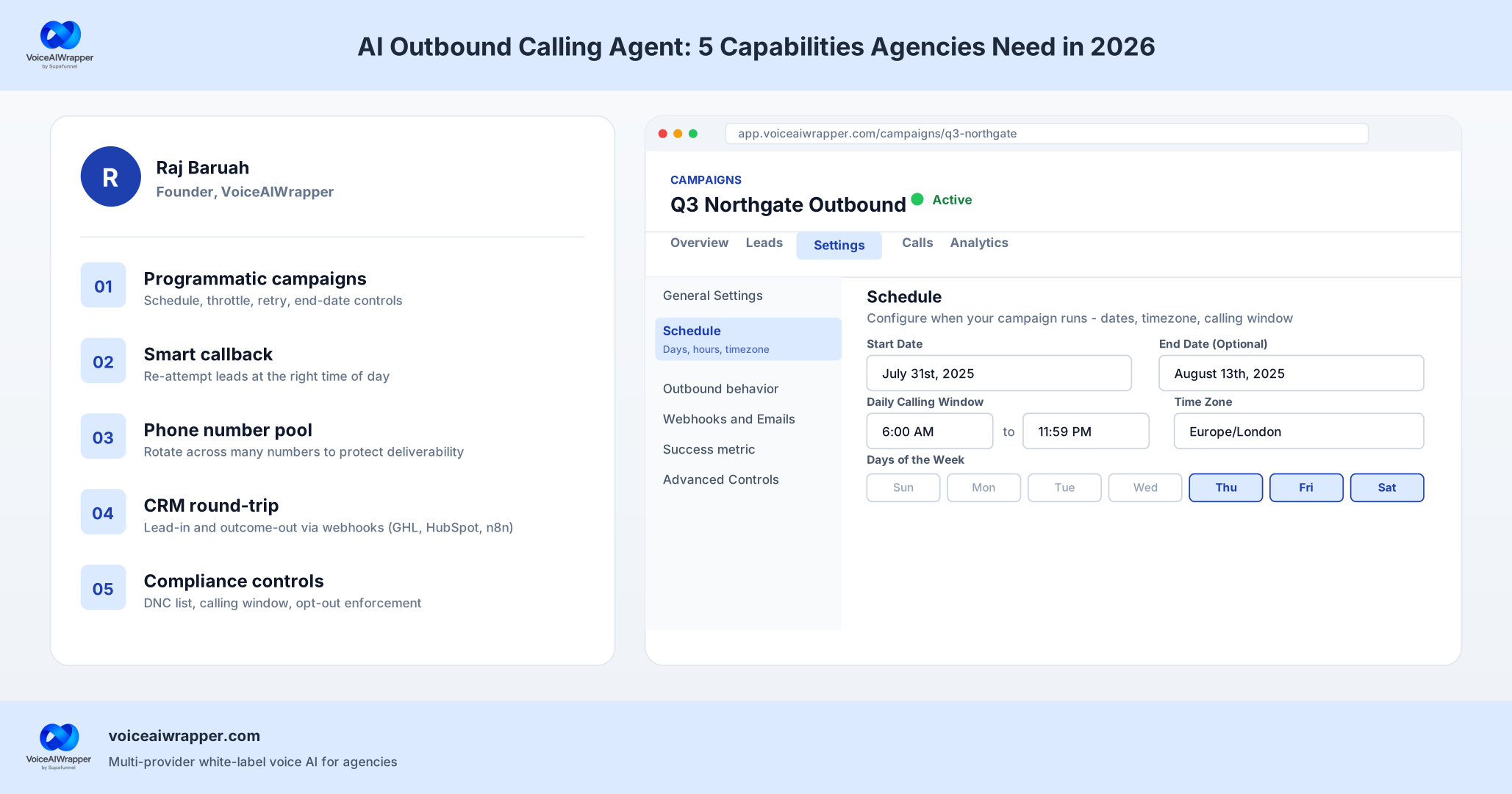
1Programmatic campaign engine on top of every provider's batch dialing. VoiceAIWrapper adds cadence controls, retry scheduling, lead timezone-aware windows, funnel routing to a different agent for no-answers, webhook funnels, and CRM dynamic DNC marking. This layer is VoiceAIWrapper-native; it does not exist inside any of the 5 providers on their own.
2Five conversational agent platforms in one account. Vapi, Retell, ElevenLabs Agents, Bolna, and Ultravox each run their own full agent runtime, knowledge base, tool calling, and telephony. VoiceAIWrapper white-labels all 5 and syncs agents via API key. Starter and Growth tiers include Vapi and Retell. Scale ($249/mo) unlocks all 5. (source: VoiceAIWrapper Pricing Page).
3Agency markup pricing with zero VoiceAIWrapper per-minute markup. Provider bills the agency at provider rate. The agency sets its own client-facing pricing plans (any markup, currency, frequency) inside VoiceAIWrapper. The client never sees the underlying cost.
4Smart callback from Growth tier ($79/mo). Agent hears "call me back at 3pm" and schedules the retry automatically at that time, instead of treating the call as a generic no-answer.
5Phone-number pool distributes high-volume outbound across multiple numbers to avoid spam flagging on any single number. Works for inbound concurrency too. (source: [Launch AI Outbound Calling Campaigns]).(https://voiceaiwrapper.com/uses/ai-outbound-calling)
6Signed BAA on Pro tier ($499/mo) for HIPAA-vertical work (healthcare, dental, medical collections). SOC 2 Type 2 + GDPR apply at all tiers (source: ElevenLabs ai Outbound Calling Page).
7TCPA + STIR/SHAKEN compliance controls built into the campaign engine: DNC suppression at creation time, calling window guardrails (8am-9pm federal, state-by-state exceptions), AI disclosure scheduling, opt-out recognition (source : TCPA playbook for AI outbound).
860-minute setup from trial signup to first outbound campaign live. 7-day free trial with full Scale-tier access, no credit card required.
9CRM round-trip: fetch leads from GoHighLevel, HubSpot, or CSV; dispatch outbound; push outcomes, transcripts, and status back via webhook, n8n, Make, or Zapier (source: Launch AI Outbound Calling Campaigns).
Run a TCPA-compliant outbound campaign for one client in under an hour.
VoiceAIWrapper Growth tier ($79/mo) unlocks unlimited campaigns, Smart Callback, and Stripe client rebilling. Scale ($249/mo) unlocks all 5 providers and the white-label Campaign API. 7-day free trial, no card required.
5 outbound capabilities VoiceAIWrapper adds on top of every provider's batch dialing
Each card below covers one VoiceAIWrapper-native outbound capability. Agents configure inside your chosen provider (Vapi, Retell, ElevenLabs Agents, Bolna, or Ultravox). VoiceAIWrapper syncs them via API key and adds the campaign-management, billing, and compliance layer agencies need to run outbound at scale for multiple clients. Read the full AI outbound calling use case page for a product-feature overview alongside these capability cards.
1
Programmatic Outbound Campaigns
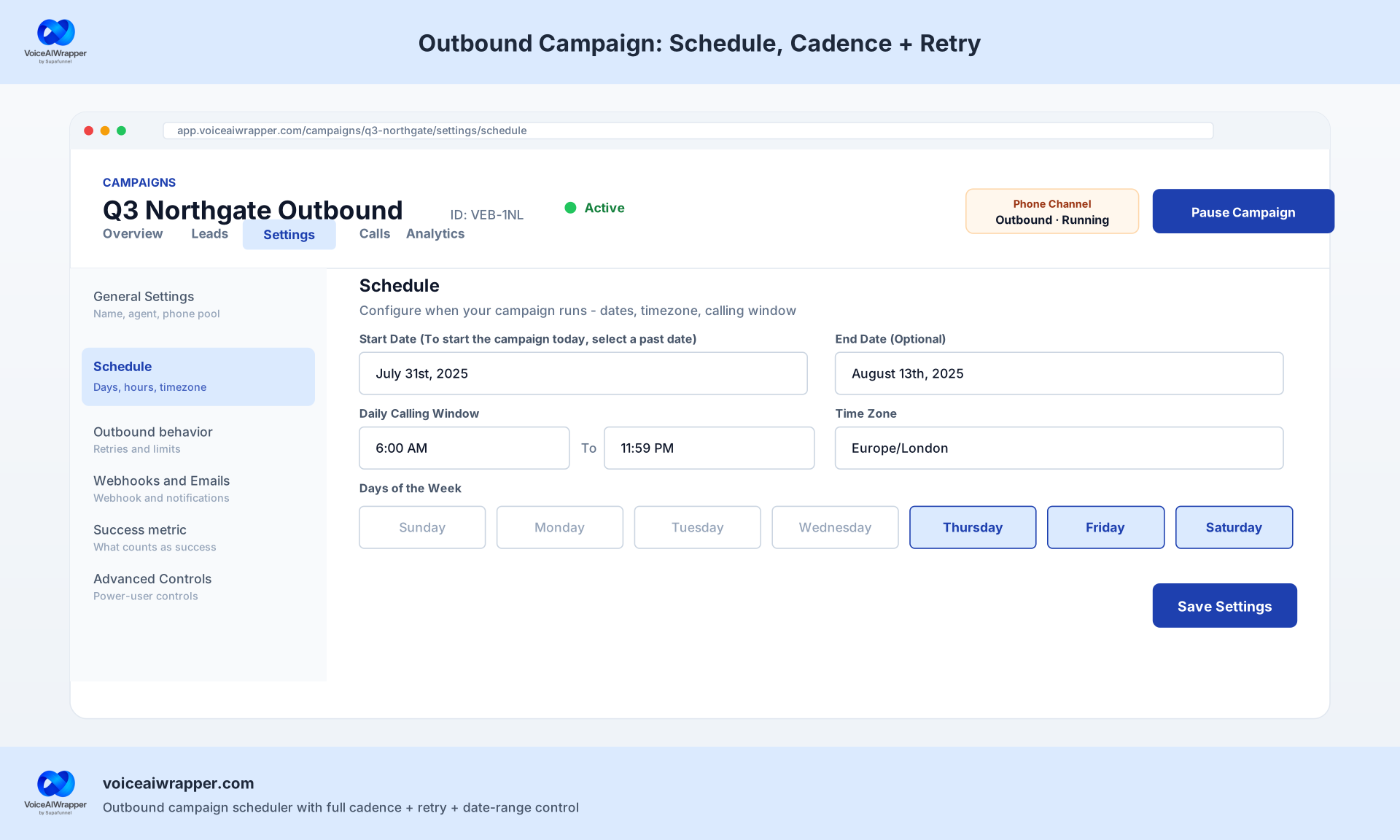
Provider batch dialing is a one-shot: upload CSV, dial, collect results. The VoiceAIWrapper campaign engine adds the operational layer that agencies actually need: cadence controls, retry logic, scheduling windows, funnel routing, and CRM dynamic suppression. All of this runs on top of the agent you already built inside your chosen provider.
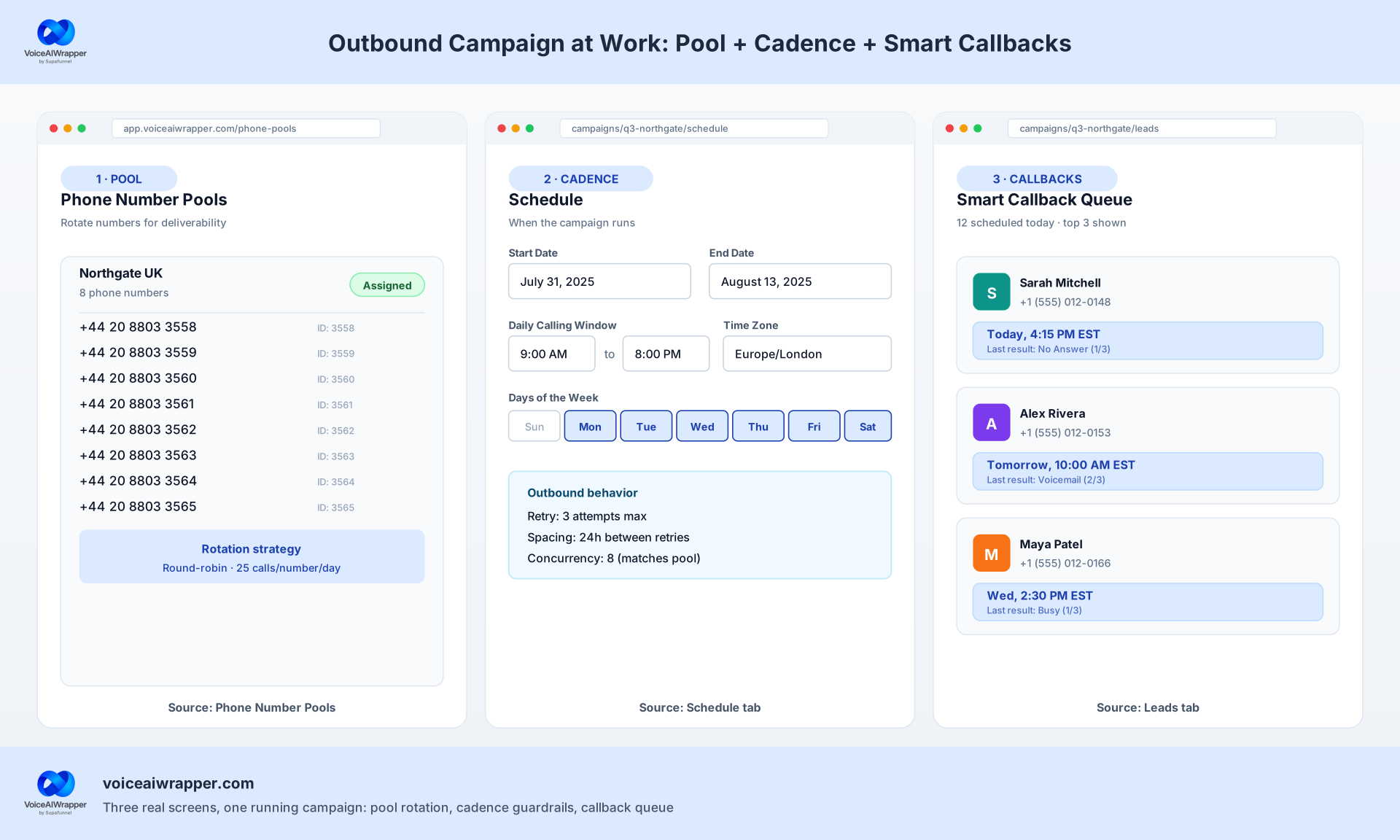
Cadence controls: set days of week, hours of day, retry count per lead, and retry caps to prevent over-contacting
Date-range scheduling: campaign start and end dates with lead timezone-aware calling windows
Funnel campaigns: route no-answers to a different agent with a different pitch on the retry, without manual intervention Webhook funnel campaigns: trigger different call sequences based on CRM status or webhook outcome
CRM dynamic marking: mark a lead as "call" or "do-not-call" based on incoming CRM status sync, before any dial is placed
All 5 conversational agent platforms supported; each provider's agent handles conversation, VoiceAIWrapper handles orchestration
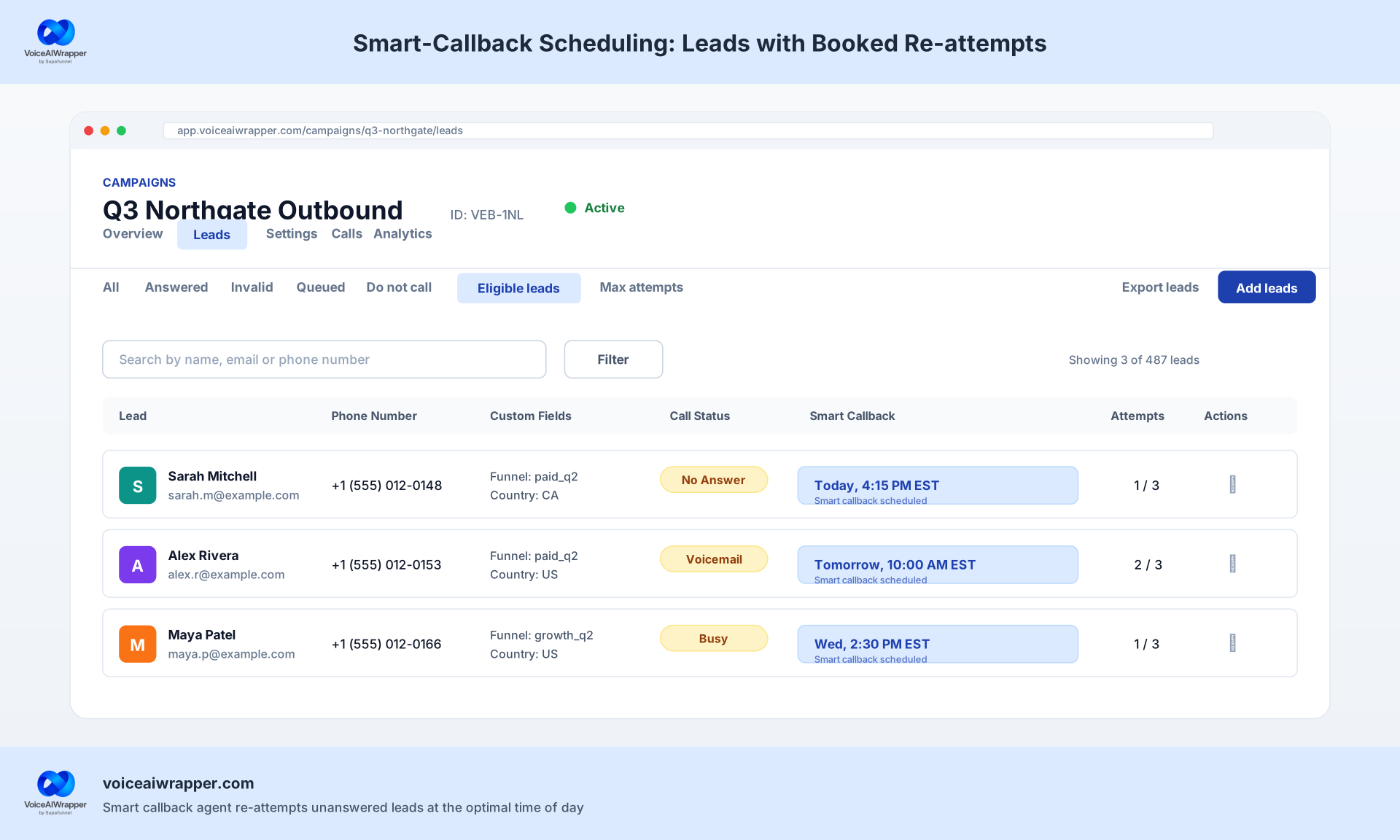
When a prospect says "I'm in a meeting, call me back at 3," the agent recognizes the request and the VoiceAIWrapper campaign engine schedules a retry for that exact time. Without smart callback, the campaign would treat that call as a generic no-answer and retry on the next scheduled cadence window. Smart callback eliminates that mismatch. Available from Growth tier ($79/mo).
Agent confirms the requested time, VoiceAIWrapper schedules the retry automatically at that slot
Eliminates the frustration of calling back at the wrong time (one of the most common reasons prospects block outbound numbers)
Works across all 5 supported providers: the provider handles the conversation, VoiceAIWrapper handles the scheduling
Per-lead callback times are visible in the campaign dashboard; agency can inspect and override if needed
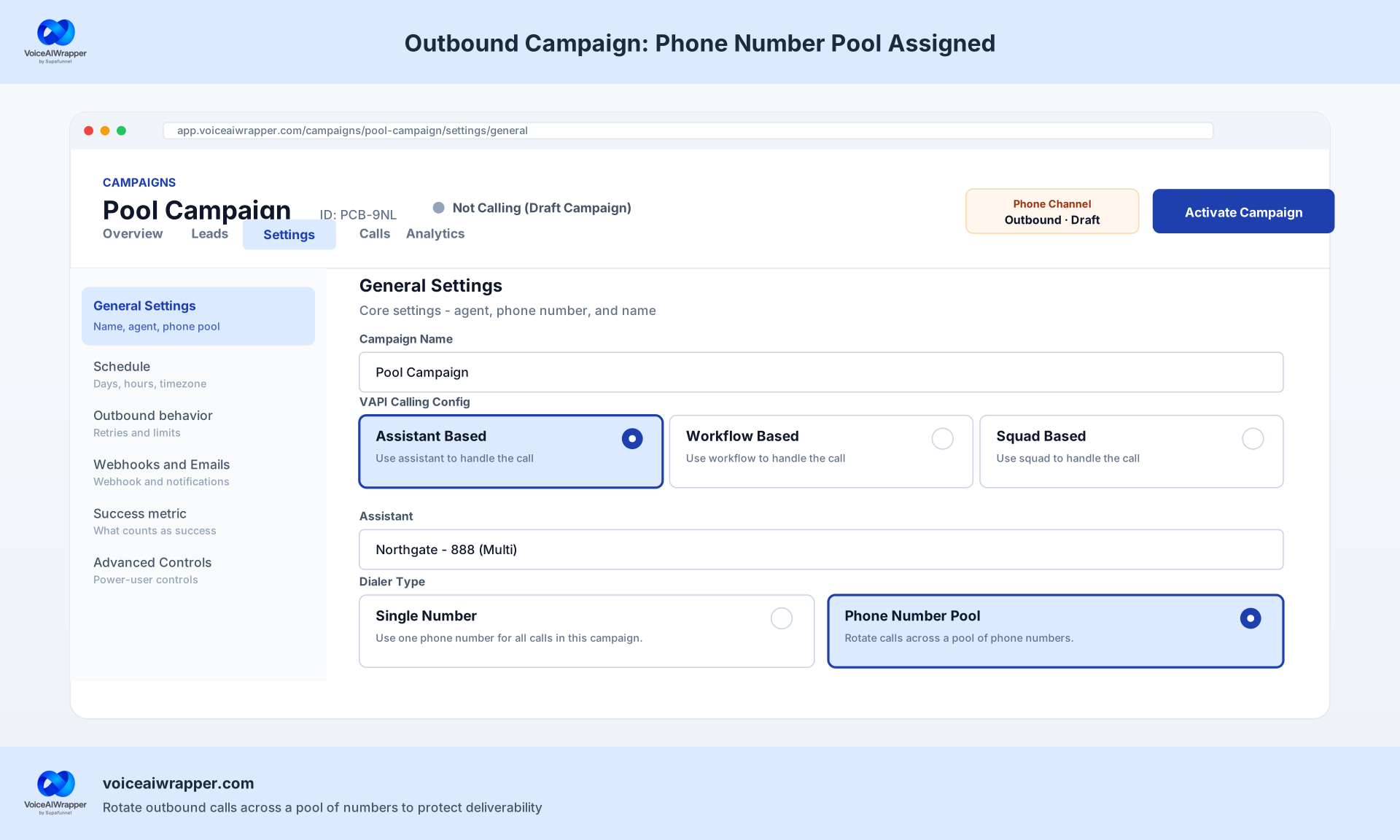
At high outbound volume, a single phone number accumulates enough decline signals to get flagged as spam. The VoiceAIWrapper phone-number pool distributes calls across multiple numbers simultaneously. Each number in the pool sees a fraction of the total volume. If one number gets flagged, the others continue while the flagged number's reputation recovers. Verified live on the outbound calling use case page.
Add multiple outbound numbers to the pool in the campaign settings; VoiceAIWrapper distributes dials automatically
Each number in the pool sees a lower per-number volume, which reduces spam-flagging risk from carriers
Works for inbound concurrency too: distribute inbound rings across pool numbers when one number is at capacity
Recommended warm-up cadence: start at approximately 50 calls/day per number, increase over 2 weeks (per Vapi playbook Ch. 17)
At high outbound volume, agencies rotate calls across multiple numbers in the pool to keep per-number reputation healthy
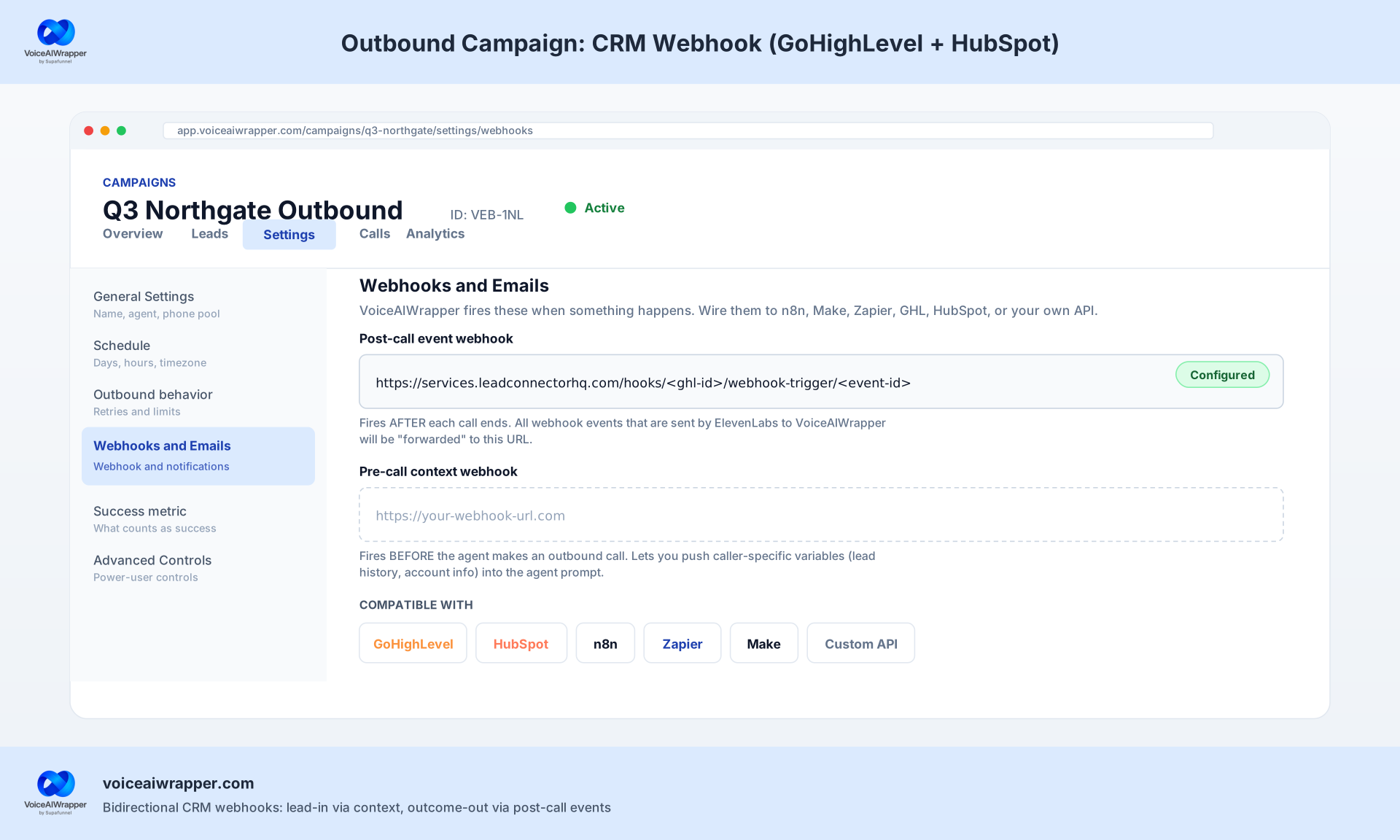
The full outbound loop: fetch leads from your CRM, dispatch the AI call, push outcomes back. Typical agency flow: lead enters GoHighLevel from a form, GHL webhook fires to VoiceAIWrapper, VoiceAIWrapper dispatches the outbound call immediately (speed-to-lead), the agent qualifies or books, and the call outcome and transcript go back to GHL via webhook or n8n. The entire loop is automated (source: outbound calling use case page)
Lead sources: GoHighLevel, HubSpot, CSV upload, or any CRM via API or webhook
Speed-to-lead: auto-call leads the moment they enter your CRM, before the lead goes cold
Push outcomes back: call status, transcript, recording, and disposition synced to CRM after each call
Integration methods: native GHL integration, HubSpot webhook, n8n, Make, Zapier, or direct API
The FCC confirmed in February 2024 that AI-generated voices fall under TCPA's "artificial or prerecorded voice" rules, requiring prior express consent for all AI outbound calls. (source: FCC Declaratory Ruling on AI-voice TCPA applicability) TCPA statutory damages run $500 to $1,500 per call with no aggregate cap. ( TCPA playbook for AI outbound) VoiceAIWrapper's compliance controls are campaign-level guardrails, not legal advice. Agencies are responsible for their own consent, DNC, and disclosure infrastructure. See the VoiceAIWrapper TCPA page and HIPAA page for the platform's compliance posture.
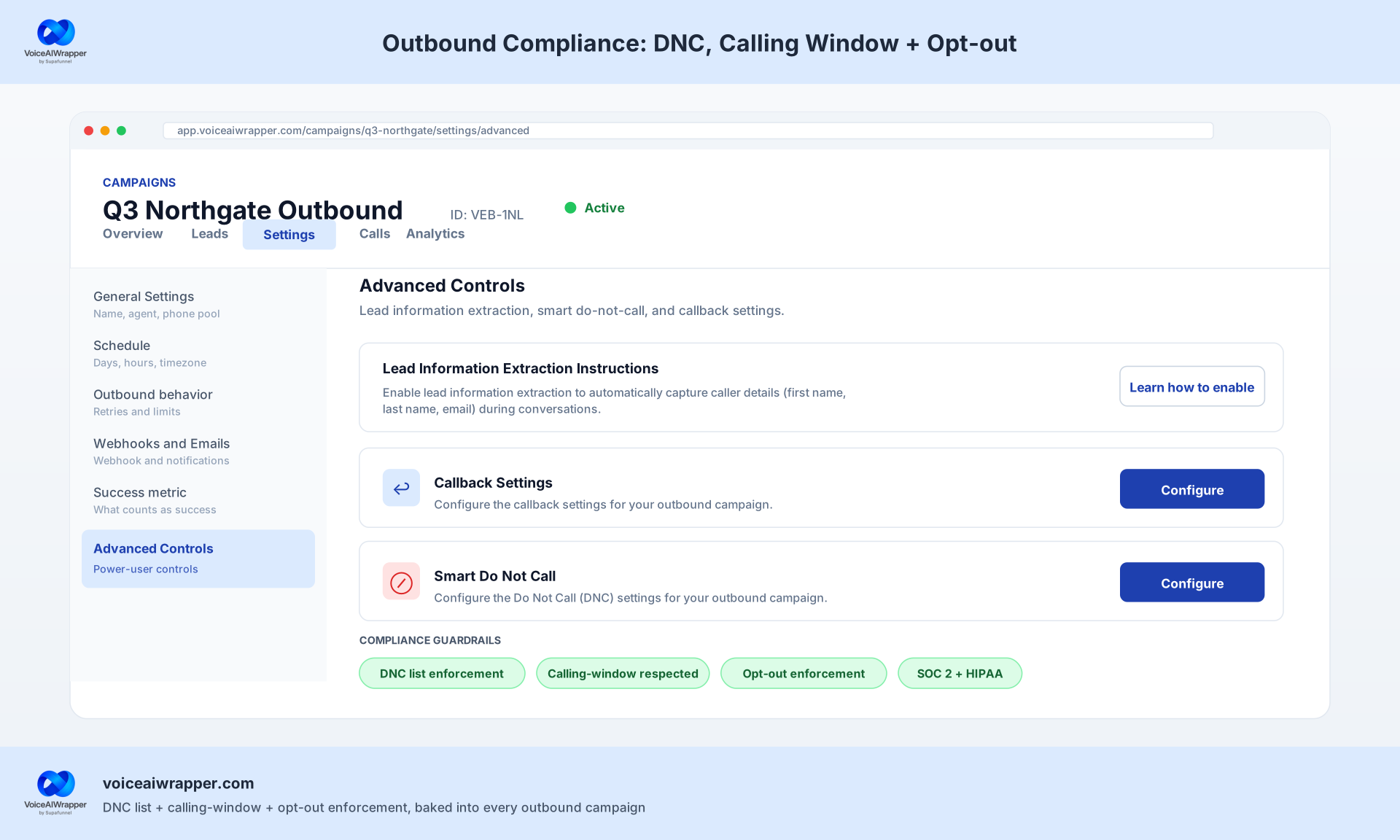
DNC suppression at campaign creation: upload a DNC list before any dial is placed, not after first complaint
Scheduling guardrails for TCPA calling windows: 8am-9pm local time (federal baseline), with state-level overrides (Connecticut 9am start, Florida 8am-8pm)
AI disclosure prompt support: configure the agent opening to include AI disclosure within the first 30 seconds (Texas SB 140 minimum, effective September 2024)
Free-form opt-out recognition: configure the agent to recognize "stop calling," "please cease," "remove me" and trigger an automated DNC update (source: TCPA playbook for AI outbound)
Signed BAA for HIPAA-vertical work (healthcare, dental, medical collections) on Pro tier ($499/mo)
SOC 2 Type 2 + GDPR apply at all tiers; EU AI Act extraterritorial reach applies to any agency calling EU residents
The only platform that white-labels all 5 conversational agent platforms in one account
Most agency platforms wrap one underlying conversational agent platform (Vapify is Vapi-only, Voicerr is mostly Vapi). Proprietary-engine platforms (Synthflow, Insighto, Thinkrr) run their own runtime and don't expose any of the 5 first-class agent platforms. VoiceAIWrapper is the only platform where an agency plugs in API keys for any combination of the 5 conversational agent platforms and white-labels them under one branded client portal.
VapiOutbound via customers array; schedulePlan with earliestAt/latestAt; BYO Twilio/Vonage/Telnyx; $0.05/min platform fee; 10 free US numbers max per account; STIR/SHAKEN + CNAM documented Vapi outbound calling + campaigns
RetellBatch calling without concurrency limits; +$0.005/dial batch surcharge; 15 countries for native numbers; Retell SIP trunking available; $0.07-$0.31/min total Retell AI outbound + batch.
ElevenLabs AgentsBatch calling launched May 2025; hundreds of calls concurrently; BYO Twilio or SIP; SOC 2 Type II + HIPAA + PCI DSS L1 + GDPR certified; Scale + Pro tier in VoiceAIWrapper ElevenLabs Agents outbound + batch calling
Bolna3 provisioning modes (default, purchased, BYO); Pilot plan: 100 concurrent; Indic language depth (Plivo/Exotel/Vobiz for India); $0.06/min standard, $0.02/min BYOK; Scale + Pro tier Bolna outbound + Indic depth
UltravoxOutbound Call Scheduler (OCS) with automatic concurrency management; BYO Twilio/Telnyx/Plivo or Voximplant; global calling launched October 2025; speech-FM architecture Ultravox Outbound Call Scheduler + global launch via Voximplant ; Scale + Pro tier
Different clients can run on different providers, isolating provider risk across your portfolio. VoiceAIWrapper surfaces alerts and analytics when a provider degrades; the agency chooses when to swap. There is no automatic mid-call failover, and that is intentional: the platform does not interfere with agency runtime decisions. VoiceAIWrapper Pricing Page
No per-minute markup, no vendor lock-in
Provider minutes bill directly to the agency's provider account at the provider's rate. VoiceAIWrapper does not mark up those minutes. The agency sets its own client-facing pricing plans. Provider pricing is published by each provider and changes independently; confirm current rates at each provider's pricing page before scoping a client retainer. pricing tiers + tier-by-tier outbound capability matrix
Telephony warm-up and STIR/SHAKEN apply to all 5 providers
Competitor wraps for reference: Vapify wraps Vapi only · Voicerr wraps mostly Vapi · ChatDash wraps 3 agent platforms (Vapi, Retell, ElevenLabs) · Synthflow / Insighto / Thinkrr run proprietary engines. VoiceAIWrapper's 5-in-one multi-provider structure is the unique position for outbound agencies that need to place clients on different platforms for different verticals.
How outbound shows up in your VoiceAIWrapper account
VoiceAIWrapper is NOT an agent builder. Outbound agents configure inside your chosen provider (Vapi, Retell, ElevenLabs Agents, Bolna, or Ultravox). VoiceAIWrapper syncs them via API key and adds the campaign, billing, compliance, and multi-client layer on top. These two tables show exactly what lives where.
WHAT PROVIDERS SHIP NATIVELY (CONFIGURE INSIDE THE PROVIDER, NOT IN VOICEAIWRAPPER)
WHICH PROVIDERS
Agent authoring, prompt configuration, RAG knowledge base
All 5 providers (BYO model varies; see Section 6 for per-provider detail)
Batch dialing (upload CSV, dial all at once, collect results)
Vapi (customers array); Retell (Batch Call, no concurrency limit); ElevenLabs (batch calling, May 2025); Bolna (Batches tab); Ultravox (OCS)
SMS tool calls, call transfers, live agent handoff
Provider-dependent; configure inside provider
WHAT VOICEAIWRAPPER ADDS NATIVELY (THE AGENCY CAMPAIGN AND BILLING LAYER)
VOICEAIWRAPPER TIER REQUIRED
Programmatic campaign engine: cadence, retry frequency, date-range scheduling, timezone-aware calling windows, funnel routing to different agent on no-answer, webhook funnels, CRM dynamic DNC marking [2]
All paid tiers (Starter 5 campaigns, Growth+ unlimited)
Smart Callback: agent hears "call me back at 3pm", schedules retry automatically at that time
Growth ($79/mo) and above
Phone-number pool: distribute high-volume outbound across multiple numbers to prevent spam flagging Outbound Calling use case Page
All paid tiers
CRM round-trip: fetch leads from GHL/HubSpot/CSV, dispatch outbound, push outcomes and transcripts back via webhook, n8n, Make, Zapier, or GHL native Outbound Calling use case Page
All paid tiers (API on Growth+)
Sub-account architecture: one VoiceAIWrapper account, many isolated client portals with separate analytics, billing plans, and logins
#First-Hand · Running AI Outbound Campaigns Through VoiceAIWrapper
What it actually feels like to run outbound AI calling through VoiceAIWrapper
This section describes the agency operator experience inside VoiceAIWrapper. Provider-side experience (latency, voice quality, language coverage, telephony provisioning) is best evaluated against each provider's own documentation. What follows is what changes for an agency once VoiceAIWrapper sits on top of the provider for multi-client outbound campaigns.
The API-key sync is the moment the operational workflow changes
The single biggest shift comes from one action: paste the provider API key into the VoiceAIWrapper admin. Every agent you have already configured inside that provider (prompts, knowledge base, tool calls, phone numbers) appears in VoiceAIWrapper within seconds. You keep editing inside the provider; the sync stays current. There is no second authoring surface to maintain, and there is no rebuild step before resale. One Vapi API key unlocks every Vapi agent across every client portal you create.
Programmatic campaigns versus batch dialing in practice
Provider batch dialing is a one-shot: upload CSV, dial, collect results. There is no native retry-based-on-outcome logic, no timezone-aware scheduling window, no funnel routing to a different agent for no-answers. VoiceAIWrapper's campaign engine adds that entire operational layer. A Retell-native batch campaign dials once and stops. A VoiceAIWrapper campaign running on top of the same Retell agent can retry no-answers on different days with a different agent and a different pitch, route qualified leads to a live transfer, and stop retrying once a lead marks DNC. The agent behavior stays inside Retell. The orchestration logic is VoiceAIWrapper-native.
CRM round-trip in practice
A typical agency flow: a lead enters GoHighLevel from a Facebook ad form. A GHL webhook fires to VoiceAIWrapper. VoiceAIWrapper immediately dispatches an AI outbound call. The agent qualifies or books. The call outcome, transcript, and recording go back to GHL via webhook or n8n. GHL updates the lead status. The sales team sees a qualified lead. The entire loop is automated from first form submission to qualified CRM entry; no human touches the queue unless the agent transfers live.
Smart callback eliminates one of the most common outbound failure modes
When a prospect says "I'm in a meeting, call me back at 3," a standard campaign treats that as a no-answer and retries on the next scheduled cadence window. That means the retry might land at 9am the next day when the prospect has forgotten the first conversation entirely. Smart Callback captures the prospect's stated time, confirms it on the call, and the VoiceAIWrapper campaign engine schedules the retry for that exact slot. The effect is a materially higher callback-to-conversation rate on that lead.
Phone-number pool in practice
At high outbound volume, a single phone number accumulates enough decline signals to get flagged. The number pool distributes calls across multiple numbers simultaneously. Each number in the pool sees a fraction of the total volume. If one number gets flagged, the others continue. The flagged number's reputation rebuilds over approximately 2 weeks while the pool continues at full volume. The warm-up discipline (start at approximately 50 calls/day per number, increase over 2 weeks per the Vapi playbook) applies to each number in the pool independently.
#Cost Structure
What an agency actually pays to run AI outbound calling
The cost question splits into four layers. VoiceAIWrapper charges a flat monthly platform fee. The 5 conversational agent platforms (Vapi, Retell, ElevenLabs, Bolna, Ultravox) each charge per-minute directly to your agency. Telephony carriers charge for phone numbers and PSTN minutes. Your agency sets its own client-facing pricing at whatever markup it chooses. VoiceAIWrapper does not mark up any provider minutes.
Telephony (PSTN for outbound) Phone numbers + carrier per-minute charges
Your telephony provider (Twilio, Telnyx, Vonage, or provider-native numbers)
Phone numbers, call initiation, PSTN per-minute carrier costs. Configured inside the provider (not inside VoiceAIWrapper). Vapi free numbers are US-only, limited to 10 per account; BYO from Twilio/Vonage/Telnyx. Retell native numbers cover 15 countries. ElevenLabs batch requires BYO Twilio or SIP. Bolna provides default US/UK/AU/India numbers plus BYO Twilio/Plivo/Exotel. Vapi outbound callingRetell AI outboundElevenLabs Agents outboundBolna outbound
Agency-set client billing Your agency captures the spread
Your client (agency sets the price)
Whatever plan, currency, and billing frequency the agency picks inside VoiceAIWrapper. Agency-side costs are separated from the client-facing view in the dashboard. Stripe rebilling available on Growth tier and above. VoiceAIWrapper Pricing Page
Methodology: VoiceAIWrapper pricing against the live pricing page . Provider per-minute rates are intentionally not republished here because they change and vary by LLM and TTS selection. Each provider pricing page is the authoritative source. PSTN telephony costs sit with the telephony provider and connect through the conversational agent platform, not through VoiceAIWrapper.
#Provider Stack: Outbound Capabilities
Outbound capabilities across all 5 conversational agent platforms
Each provider runs its outbound layer differently. Use this section to pick the right provider for each client's volume, region, and architecture requirements. Agents configure inside each provider; VoiceAIWrapper adds the campaign engine, number pool, and agency billing layer on top.
Vapi
Starter + Growth + Scale + Pro
Outbound surface: customers array for batch dialing; schedulePlan with earliestAt / latestAt for scheduled dispatch; dashboard-based outbound campaigns with CSV recipient upload and dynamic variables. Twilio: 1 CPS default, 5 CPS max. Telnyx: 1 CPS default, 16 CPS max. Free numbers US-only (10 per account). BYO Twilio, Vonage, or Telnyx for international. STIR/SHAKEN (A/B/C levels) and CNAM registration documented. VoiceAIWrapper is a listed Vapi platform partner .
Retell
Starter + Growth + Scale + Pro
Outbound surface: Batch calling with no stated concurrency cap. CPS controls prevent overload. Setup: select agent with dynamic variables, choose phone number, upload CSV, select send-now or scheduled time. Batch surcharge: $0.005/dial (in addition to per-minute rates). Native numbers in 15 countries; BYO via Twilio, Telnyx, Vonage, or Retell SIP trunking. For agencies running Retell AI under their own brand , the no-concurrency-cap batch model is the strongest out-of-box option across the 5 providers.
ElevenLabs Agents
Scale + Pro
Outbound surface: Batch calling launched May 28, 2025. Supports "hundreds of calls concurrently." Upload contact lists via CSV or XLS with dynamic variables. Schedule immediately or for a future time. Real-time batch progress tracking and performance analysis reports. Requires BYO Twilio or SIP trunking (ElevenLabs does not provision native PSTN numbers for outbound batch) . Compliance certifications: SOC 2 Type II, HIPAA, PCI DSS L1, GDPR. Agencies can explore the full use case at ElevenLabs white-label for agencies.
Bolna
Scale + Pro
Outbound surface: Three provisioning modes: (1) default centralized numbers (US/UK/AU = +1; India = +91), (2) dedicated purchased numbers via dashboard, (3) BYO telephony (Twilio for outside India; Plivo, Vobiz, Exotel for India; BYO SIP trunk). Batches tab for scheduling automated calling campaigns with auto-retry and context variables. Default concurrency: 10 concurrent calls for all paid users. Pilot plan: up to 100 concurrent. Primary differentiator: Indic language depth for agencies serving India markets and South Asian diaspora verticals. Compliance posture: see bolna.ai docs for current certifications
Ultravox
Scale + Pro
Outbound surface: Outbound Call Scheduler (OCS) with automatic concurrency management (prevents rate limit errors automatically), flexible scheduling windows, automatic capacity reservation for high-priority calls, and batch progress tracking. BYO telephony via Twilio, Telnyx, Plivo, Exotel, or Voximplant. Global calling launched October 29, 2025 via Voximplant. Architecture distinction: Ultravox is a speech-foundation-model (processes audio directly without STT-LLM-TTS intermediate steps), which affects audio latency profile differently from the other 4 providers. Compliance posture: see ultravox.ai for current certifications
✅5 voice providers under one dashboard
VoiceAIWrapper Provider Count
1VoiceAIWrapper - 5
2ChatDash - 3 (Vapi, Retell, ElevenLabs)
3Synthflow Agency - 1 (proprietary)
4Vapify - 1 (Vapi only)
5Voicerr - 1 (Vapi-focused)
6Direct ElevenLabs - 1 (ElevenLabs only)
#Cost by Volume, 4 Agency Profiles
VoiceAIWrapper platform fee at 4 real outbound calling volumes
This table shows the VoiceAIWrapper subscription cost only. Provider minutes are billed directly from each provider to your agency at the provider's own rates, which vary by provider and by LLM and TTS selection. We do not republish provider per-minute rates here because they change. See each provider's pricing page for current rates.
AGENCY PROFILE
ESTIMATED MINUTES/MO
TYPICAL CLIENTS
VOICEAIWRAPPER PLAN
VOICEAIWRAPPER MONTHLY COST
Freelancer / solo Testing one vertical, one to three clients
~500 min/mo
1–3
Starter
$29/mo
Lead-gen agency Running campaigns for multiple clients
~2,500 min/mo
5–10
Growth
$79/mo
Established agency Unlimited clients, all 5 providers
~10,000 min/mo
15–25
Scale (most popular)
$249/mo
BPO / enterprise High-volume, healthcare BAA, custom dev
25,000+ min/mo
25–50+
Scale or Pro
$249-$499/mo
Important notes: Provider minutes are billed directly from the provider to the agency. Rates vary by provider and plan. See each provider's pricing page for current per-minute rates: Vapi , Retell , ElevenLabs Agents , Bolna . Access to all 5 providers (Vapi, Retell, ElevenLabs, Bolna, Ultravox) requires the Scale tier ($249/mo). The Growth tier ($79/mo) includes unlimited campaigns and Smart Callback but supports Vapi and Retell only.
#Migration Paths by Source Architecture
Where agencies come from and what the migration into VoiceAIWrapper looks like
Your starting architecture determines how much effort migration takes. API-wrapper platforms migrate by syncing the same API key. Proprietary engines require rebuilding agents on one of the 5 supported platforms. Direct-build stacks and legacy IVR involve the most structural change but produce the highest operational gain after migration.
Table 1 · Risk matrix for 2026–2030 forecast
SOURCE ARCHITECTURE
EXAMPLES
TYPICAL PAIN POINTS BEFORE MIGRATION
WHAT CHANGES IN VOICEAIWRAPPER
ESTIMATED LIFT TIME
API-WRAPPER BUILD Direct integration on a single provider
Direct Vapi, direct Retell, direct ElevenLabs, direct Bolna, direct Ultravox
No client portal isolation. No agency markup pricing. No campaign engine (retry cadence, smart callback, funnel routing). Manual billing and reporting per client. No phone-number pool.
Paste your existing API key into VoiceAIWrapper. Every agent, knowledge base, tool, and phone number from your provider account syncs immediately. No agent rebuild. Add the VoiceAIWrapper campaign engine, number pool, sub-account portals, and agency billing on top of the same provider account you already use.
Less than 1 day for sync; 1-2 days to configure client portals and billing
PROPRIETARY-ENGINE SAAS Platforms with their own runtime
Locked into one runtime. Cannot switch providers if performance degrades or pricing changes. Agent export is rarely portable. Cannot access Vapi/Retell/ElevenLabs/Bolna/Ultravox without a full rebuild on any other platform anyway.
Rebuild agents on whichever of the 5 providers fits your client use case (Vapi for code-first flexibility, Retell for no-concurrency-cap batch, ElevenLabs for multilingual breadth, Bolna for Indic-language depth, Ultravox for foundation-model architecture). Re-test prompts and tool calls. Migrate clients in phases. After rebuild, the full VoiceAIWrapper campaign engine, agency billing, and sub-account architecture are available immediately.
Custom Python + Twilio + OpenAI or Anthropic + STT pipeline built in-house
Infrastructure maintenance burden: carrier changes, STT API deprecations, LLM version pinning, STIR/SHAKEN compliance, DIY number pool logic. Every new client means forking the stack or sharing a multi-tenant system with no client isolation. No programmatic campaign engine without building it.
Move the agent logic (system prompt, knowledge base, tool calls) into one of the 5 platforms. Connect the provider API key to VoiceAIWrapper. The telephony, compliance, campaign engine, number pool, smart callback, client portals, and agency billing all come with VoiceAIWrapper. No infrastructure code to maintain for these layers.
LEGACY IVR OR HUMAN BPO Touchtone IVR or human agent call center
Twilio Studio IVR, Genesys IVR, human call center with script-based agents, human SDR team
High labor cost per call. No 24/7 coverage at linear cost. IVR handles only simple menu trees; complex qualification requires human escalation. No conversation intelligence or CRM round-trip on IVR. Cannot scale volume without proportional headcount.
Build AI agents on one or more of the 5 supported platforms. AI agents handle qualification, objection handling, appointment booking, and live transfer triggers. VoiceAIWrapper runs the campaign engine (cadence, retry, smart callback, DNC suppression) and CRM round-trip. Human agents handle only the cases the AI transfers. Initial setup involves agent scripting, provider selection, and telephony provisioning. Post-launch: weekly optimization loop to improve containment rate.
API-wrapper to API-wrapper migrations are the lowest-effort class: the provider account, API key, agents, and phone numbers stay exactly where they are. VoiceAIWrapper layers on top without touching the provider configuration. See the Vapi integration guide for a step-by-step example of the API-key sync process
#Launch Guide: Day 1, Day 2, Day 7
Day 1 / Day 2 / Day 7: from zero to a live TCPA-compliant outbound campaign
This guide covers the fastest path to a production-ready outbound campaign for one client. VoiceAIWrapper's 60-minute setup claim applies to the platform provisioning; telephony warm-up (2 weeks at approximately 50 calls/day per Vapi playbook) runs in parallel. Do not skip warm-up
Day 1
Connect your provider API key, set up a client sub-account, and sync your first agent
Start the 7-day free trial at VoiceAIWrapper Signup Page (full Scale-tier access, no card required). In the admin dashboard, paste your provider API key (Vapi, Retell, ElevenLabs, Bolna, or Ultravox). Every agent you have already built inside that provider syncs into VoiceAIWrapper immediately. Create your first client sub-account: pick a subdomain keyword, upload your agency logo, and set your color theme. The client sees your brand only. Configure your agency markup pricing plan for this client (the provider bills your agency at the provider rate; you set the client-facing price inside VoiceAIWrapper at whatever markup you choose). Outcome: Provider API key connected, client sub-account live on branded subdomain, agent visible in VoiceAIWrapper admin, agency markup pricing configured.
Day 2
Purchase and warm up a phone number; run your first test campaign
Purchase a phone number through your telephony provider (Twilio, Telnyx, Vonage, or provider-native numbers where available). Register the number for CNAM (3-5 business days to propagate) and confirm STIR/SHAKEN A-level attestation with your carrier. Start the warm-up cadence immediately: approximately 50 calls/day for the first 2 weeks before ramping volume. Vapi Playbook [fcc.gov call-authentication]() + Bandwidth attestation guide + Viirtue 2026 STIR/SHAKEN compliance In VoiceAIWrapper, upload a small test CSV (10-20 leads), attach your agent, set the calling window (8 a.m. to 9 p.m. local time of the called party per TCPA baseline, or 8 a.m. to 8 p.m. for Florida leads), and launch a test campaign. Review the campaign analytics to confirm call disposition logging, agent transcript capture, and webhook delivery to your CRM or n8n/Zapier automation. Outcome: Phone number purchased and warm-up cadence started; CNAM registered; first test campaign dispatched; CRM webhook confirmed round-trip.
Day 7
Configure the full campaign cadence, DNC suppression, and CRM round-trip; invite the client
In VoiceAIWrapper's campaign engine, configure the retry cadence: set days of week, hours of day, retry count per lead, and retry cap. Upload your DNC suppression list before any production dial (upload the list before creating the campaign, not after the first complaint). Enable Smart Callback (Growth tier and above) so the agent automatically schedules a retry when a prospect says a specific time phrase like "call me back at 3." Test the full CRM round-trip: lead enters GHL or HubSpot, webhook fires to VoiceAIWrapper, call dispatches, outcome and transcript push back to CRM. See the GoHighLevel outbound voice AI with VoiceAIWrapper page for the step-by-step GHL integration. Invite the client to their branded portal via Option A (share login credentials, available on every tier) or Option B (Agency SaaS Creator on Pro tier). From this point, the weekly optimization loop begins: review top no-answer patterns, top transfer triggers, retry outcome data, and make one targeted agent or campaign adjustment per week. See the improving outbound AI calling performance with analytics guide for the full optimization playbook.
#When This Guide Does Not Fit
Honest concession: when VoiceAIWrapper outbound is not the right call
Skip this guide if...
1You are a solo developer running one campaign for one client with no plans to resell. If you are running a single outbound campaign with full code-level control and no client-portfolio intent, building directly on the provider (Vapi's outbound campaigns dashboard, Retell's batch dialer, or ElevenLabs batch calling) is simpler. Come back to VoiceAIWrapper when you have 3 or more clients to operate, or when you need the campaign engine (retry cadence, smart callback, funnel routing) and agency billing layer to stop being manual work.
2Your agency's clients are all India-based or Southeast-Asia-based with Hindi / Indic-first deployments.. Bolna's Indic language depth, native Indian carrier integrations (Plivo, Exotel, Vobiz), and India-based default numbers (+91) are its primary differentiator. Agencies whose entire client base is India-market may prefer building directly on Bolna at the start, particularly for regulatory and carrier nuance. VoiceAIWrapper runs Bolna as one of its 5 providers on the Scale tier, so you can still use VoiceAIWrapper's campaign engine with Bolna; the concession is about whether the full platform fee is justified at lower volume.
3Your agency is inbound-only and outbound is not on the roadmap. This is an outbound calling playbook. If your agency's work is exclusively inbound (receptionist, scheduling, support), the campaign engine, number warm-up, TCPA consent workflow, and DNC suppression sections do not apply to your use case. VoiceAIWrapper supports inbound fully on all tiers, but this guide is not the right reference for inbound-only deployment. Look at the AI outbound calling use case page for the overview, and the inbound use case pages for the right playbook.
4Your volume is below 500 calls/month and the platform fee is not yet justified. At very low volume (under 500 calls/month for one or two clients), the $29 Starter platform fee may represent a meaningful share of monthly provider cost. Build directly on the provider first, validate the use case with the client, then migrate into VoiceAIWrapper when you are ready to standardize the workflow across multiple clients and stop re-building campaign logic for each one. The 7-day free trial has no card requirement, so it costs nothing to test whether the campaign engine saves enough setup time to be worth $29.
#Launch Checklist
The 12-point outbound calling launch checklist for agency production
Run this checklist before every new outbound client campaign. The compliance items (steps 3-6) are not optional; they are the minimum TCPA operational floor. The VoiceAIWrapper campaign items (steps 7-12) are what distinguish a platform-managed campaign from a one-shot batch dial.
Step 1
Obtain your provider API key and configure the client sub-account portal
Connect your Vapi, Retell, ElevenLabs, Bolna, or Ultravox API key inside VoiceAIWrapper. Create a sub-account portal for the client (branded subdomain, logo, color theme). Assign the synced outbound agent to the client portal. Agents build and configure inside the provider; VoiceAIWrapper syncs them via API key.
Step 2
Purchase a phone number and set up telephony
Purchase a number from your telephony provider or use provider-native numbers where available (Retell native numbers in 15 countries; Vapi free numbers US-only up to 10 per account). Connect the number to your agent inside the provider platform. The agent connects to VoiceAIWrapper automatically via the API-key sync.
Step 3
Start telephony warm-up at approximately 50 calls/day for 2 weeks
Do not start high-volume dialing from a new number. Start at approximately 50 calls/day and ramp slowly over 2 weeks. A new number going from 0 to 500 calls/day can get flagged as spam within days; answer rates can drop from 45% to below 10% in one week from spam flagging alone. Reputation recovery takes approximately 2 weeks of low-volume dialing after a flag.
Step 4
Register CNAM and confirm STIR/SHAKEN A-level attestation
Register the phone number with the CNAM (Caller Name) database so it shows your client's business name instead of "Potential Spam." CNAM registration takes 3-5 business days; full propagation across all carrier networks takes 2-4 weeks. Confirm A-level STIR/SHAKEN attestation with your carrier: A-level means the provider has verified the caller's identity AND the right to use the number. B-level and C-level attestations deliver lower answer rates on high-volume campaigns.
Step 5
Upload the DNC suppression list before the first dial
Upload the National DNC scrub results and any internal DNC list inside VoiceAIWrapper before creating the campaign, not after the first complaint. The TCPA requires DNC scrubbing every 31 days at minimum; real-time suppression is the defensible standard. Existing Business Relationship does not exempt AI-voice outbound calls. For more on VoiceAIWrapper's TCPA compliance posture, see the TCPA compliance page.
Step 6
Script the AI disclosure in the agent's opening turn (first 30 seconds)
Configure the agent's opening statement to identify the calling company, disclose AI status, and offer opt-out within the first 30 seconds. Texas SB 140 (effective September 2024) requires AI disclosure in the first 30 seconds. California AB 489 and SB 1001 require AI disclosure in healthcare and commercial contexts. As a universal safe practice: identify company, disclose AI, offer opt-out in every opening turn regardless of the called party's state.
Step 7
Configure retry caps, calling windows, and timezone-aware scheduling in VoiceAIWrapper
In the VoiceAIWrapper campaign engine, set the retry cap per lead (how many times to attempt before marking DNC), days of week, hours of day per the TCPA windows (8 a.m. to 9 p.m. local time; Connecticut 9 a.m. start; Florida 8 p.m. hard stop), and date range for the campaign. For leads across multiple states, set the calling window to the most restrictive applicable state (9 a.m. to 8 p.m. local time covers all state-specific variants).
Step 8
Test the CRM webhook round-trip before going live
Run a test call with a dummy lead record, verify the call outcome (connected, no-answer, transferred, DNC-flagged), and confirm the outcome plus transcript push back to your CRM via webhook or n8n/Zapier/Make automation. Fix any webhook endpoint or field-mapping issues before the production campaign starts. For GHL-specific setup, see the GoHighLevel outbound voice AI with VoiceAIWrapper guide.
Step 9
Configure the phone-number pool for high-volume campaigns
At outbound volumes above a few hundred calls per day from one number, reputation degrades. VoiceAIWrapper's phone-number pool distributes outbound calls across multiple numbers simultaneously. Each number in the pool accumulates less per-number volume; if one number gets flagged, the others continue while you rebuild the flagged number's reputation. Agencies running 1,000+ concurrent dials typically rotate across multiple numbers in the pool .
Step 10
Configure agency markup pricing and invite the client to their branded portal
Set the client-facing pricing plan inside VoiceAIWrapper (e.g., 500 minutes for $150/month). The client sees your agency's pricing; the provider bill comes to your agency at the provider rate. Stripe rebilling is available on Growth tier and above. Option A invite: create the client portal and share login credentials (all tiers). Option B invite: Agency SaaS Creator on Pro tier ($499/mo) for client-self-serve signup from your agency site.
Step 11
Test Smart Callback with a "call me back" trigger phrase
Smart Callback (Growth tier and above) schedules a retry automatically when the agent hears a callback request phrase ("call me back at 3," "try me tomorrow morning"). Without Smart Callback, that call logs as a no-answer and retries on a generic cadence. Test the trigger phrase in your agent script before the production campaign to confirm the scheduling logic fires correctly.
Step 12
Run the first week of the production campaign; review analytics daily
Launch at a controlled volume (ramp from warm-up cadence, not cold). Review the VoiceAIWrapper campaign analytics daily during the first week: connect rate, no-answer rate, transfer rate, DNC trigger rate, and agent transcript quality. The improving outbound AI calling performance with analytics guide covers the full optimization loop. Address any number flagging (stop that number for 48-72 hours, restart at low volume) before the issue compounds.
Run this 12-step outbound checklist on a live campaign in under an hour.
Start the 7-day free trial with full Scale-tier access. No card required. Connect your provider API key, configure your first client sub-account, and launch a TCPA-compliant outbound campaign today.
The four most common outbound-specific pushbacks (and honest answers)
""Can't I just use Vapi's outbound campaigns dashboard or Retell's batch dialer directly?"Yes, and for a single one-shot CSV blast with one client, that is the simpler path. The limitation shows when you need the campaign to do more: retry no-answer leads on different days with a different pitch; route qualified prospects to a different agent; schedule retries based on a prospect saying "call me back at 3"; suppress leads who opted out mid-campaign across multiple runs; push call outcomes and transcripts back to your CRM automatically. Provider batch dialers dispatch the list and stop. VoiceAIWrapper's campaign engine adds the operational layer that turns a one-shot dial into a managed cadence. The sub-account architecture, agency markup billing, and branded client portals are separate from the campaign engine and not available from any of the 5 providers natively.
""How is AI outbound calling different from Aircall or a Twilio predictive dialer?"
Yes, and for a single one-shot CSV blast with one client, that is the simpler path. The limitation shows when you need the campaign to do more: retry no-answer leads on different days with a different pitch; route qualified prospects to a different agent; schedule retries based on a prospect saying "call me back at 3"; suppress leads who opted out mid-campaign across multiple runs; push call outcomes and transcripts back to your CRM automatically. Provider batch dialers dispatch the list and stop. VoiceAIWrapper's campaign engine adds the operational layer that turns a one-shot dial into a managed cadence. The sub-account architecture, agency markup billing, and branded client portals are separate from the campaign engine and not available from any of the 5 providers natively.
""How do I avoid getting my numbers flagged as spam?"Three mechanisms working together: (1) warm-up: start new numbers at approximately 50 calls/day for 2 weeks before ramping; (2) STIR/SHAKEN A-level attestation from your carrier; (3) CNAM registration so the number shows a business name instead of "Potential Spam." The most common failure mode is skipping warm-up because the first campaign feels urgent. Answer rates can drop from 45% to below 10% in one week from a spam flag; recovery takes approximately 2 more weeks at low volume. VoiceAIWrapper's phone-number pool distributes high-volume calls across multiple numbers so no single number accumulates enough decline signals to trigger a flag. See the VoiceAIWrapper security policy page for the platform's own compliance posture.
""Why do I need VoiceAIWrapper's campaign engine on top of the provider's batch dialer?"Provider batch dialing is a one-shot operation: upload CSV, dispatch, collect results. There is no native retry-based-on-outcome logic, no timezone-aware scheduling per lead, no funnel routing to a different agent for no-answers, no smart callback for leads who request a specific time, no DNC propagation across multiple campaign runs, and no CRM round-trip without custom code. VoiceAIWrapper's campaign engine adds all of these above the provider's batch layer. The practical difference: a Retell-native batch campaign dials once and stops. A VoiceAIWrapper campaign built on Retell can retry no-answers on different days with a different agent, route qualified leads to a live transfer, stop retrying once a lead marks DNC, and push every outcome to the CRM. That is the operational moat for agencies running multi-client outbound programs.
Frequently Asked Questions
Question
How much does AI outbound calling cost?
Answer
AI outbound calling costs split across two layers. The VoiceAIWrapper platform fee runs from $29 per month (Starter, Vapi and Retell, up to 5 clients) to $79 per month (Growth, 15 clients, unlimited campaigns, Smart Callback, Vapi and Retell) to $249 per month (Scale, all 5 providers, unlimited clients) to $499 per month (Pro, HIPAA BAA included). Provider conversational minutes are billed directly to your agency from the provider at the provider's own rate, which varies by LLM and TTS selection. VoiceAIWrapper does not mark up provider minutes. Telephony carrier costs (phone numbers, PSTN per-minute) sit with the telephony provider. Check the VoiceAIWrapper pricing page for current subscription tiers; check each provider's pricing page for current per-minute rates.
Question
What is the difference between batch dialing and programmatic outbound?
Answer
Batch dialing is a one-shot operation: upload a CSV of leads, the provider dials them, collect call outcomes. Programmatic outbound adds a campaign engine layer on top: retry cadence by outcome (no-answer retries on a different day, with a different agent), timezone-aware calling windows, smart callback scheduling (agent hears “call me back at 3” and schedules the retry automatically), funnel routing to different agents based on call outcomes, DNC propagation across multiple campaign runs, and CRM round-trip after each call. VoiceAIWrapper’s campaign engine is the programmatic layer; the 5 conversational agent platforms (Vapi, Retell AI, ElevenLabs Agents, Bolna, Ultravox) provide the underlying batch or API-based dial mechanics.
Question
Do I need TCPA consent for AI outbound calls?
Answer
Yes. The FCC confirmed in February 2024 that AI-generated voices fall under TCPA’s “artificial or pre-recorded voice” rules, requiring prior express consent of the called party. For AI marketing calls to wireless numbers, Prior Express Written Consent (PEWC) is required: a signed disclosure naming the specific business, authorized phone number, and confirming consent is not a purchase condition. For informational calls only (appointment reminders, account alerts), Prior Express Consent (PEC) is sufficient. Existing Business Relationship does not exempt AI-voice outbound from consent requirements. For VoiceAIWrapper’s TCPA compliance posture, see the VoiceAIWrapper TCPA page.
Question
How do I avoid getting my outbound numbers flagged as spam?
Answer
Three practices prevent the most common spam flagging scenarios. First, warm up new numbers starting at approximately 50 calls per day over 2 weeks before ramping volume; skipping this step is the most common cause of rapid flag events where answer rates can drop from 45% to below 10% in one week. Second, register CNAM for every outbound number so it shows a business name to the called party. Third, confirm STIR/SHAKEN A-level attestation with your carrier, which signals to terminating networks that both the caller identity and right to use the number are verified. At high volume, use VoiceAIWrapper’s phone-number pool to distribute dials across multiple numbers so no single number accumulates enough decline signals to trigger a flag.
Question
Which provider should I use for high-volume AI outbound?
Answer
For raw no-concurrency-cap batch dialing with native numbers in 15 countries, Retell AI’s batch dialer is the strongest out-of-box option among the 5 supported providers. For code-first flexibility with custom per-lead overrides and Twilio or Telnyx CPS control, Vapi’s outbound campaigns dashboard is the most configurable. For multilingual batch campaigns with hundreds of concurrent calls and strict compliance certifications (SOC 2, HIPAA, PCI DSS Level 1, GDPR), ElevenLabs Agents batch calling (launched May 2025) is the option with the strongest published compliance stack. For Indic-language outbound with Indian carrier integrations (Plivo, Exotel, Vobiz), Bolna is the specialist. For speech-foundation-model architecture with automatic concurrency management, Ultravox OCS is the architectural outlier. VoiceAIWrapper’s Scale tier lets you run all 5 providers for different clients from one account.
Question
Does VoiceAIWrapper work with GoHighLevel for outbound campaigns?
Answer
Yes. VoiceAIWrapper integrates with GoHighLevel for outbound calling via API, webhook, or n8n/Make/Zapier automation. The standard GHL outbound workflow: a lead enters GHL from a form or ad, a GHL webhook fires to the VoiceAIWrapper Campaign API, VoiceAIWrapper dispatches an AI outbound call (speed-to-lead automation), the call happens and the agent qualifies or books, and the call outcome plus transcript push back to GHL via webhook. The lead status updates in GHL automatically. The VoiceAIWrapper GoHighLevel outbound voice AI page covers the full GHL integration setup. Campaign API is available on the Growth tier and above.
Question
Can AI outbound calling integrate with my existing CRM?
Answer
Yes. VoiceAIWrapper integrates with CRMs and automation tools via API, webhook, native GHL connector, or automation layer (n8n, Make, Zapier, HubSpot). The round-trip works in both directions: fetch leads from your CRM and dispatch calls, then push call outcomes, transcripts, and disposition status back to the CRM. Speed-to-lead automation (auto-call a lead the moment it enters the CRM) is a common configuration. The VoiceAIWrapper CRM integration page covers CRM connection options in detail.
Question
What makes VoiceAIWrapper different from other AI calling platforms?
Answer
VoiceAIWrapper is the only platform that white-labels all 5 conversational agent platforms (Vapi, Retell AI, ElevenLabs Agents, Bolna, Ultravox) in one account and adds a programmatic campaign engine, phone-number pool, smart callback, sub-account architecture, agency markup pricing, Stripe rebilling, and per-client analytics separation on top. Agencies using VoiceAIWrapper do not build any of those operational layers by hand. The agent runs in the provider (configured inside Vapi, Retell, ElevenLabs, Bolna, or Ultravox); VoiceAIWrapper handles the campaign orchestration, the client portals, and the agency billing. This is why 1,000+ agencies have used the platform across the VoiceAIWrapper Stripe account’s lifetime and the platform holds a 5.0/5 rating from 17 verified reviews on SaaSHub.
Like this article? Share it.
VoiceAIWrapper is rated 5/5 stars by clients on SaasHub
Found our insights helpful? Start your voice AI white label free trial
Our product is free to use for 7 days (no credit card required). You get access to premium features available in our Scale plan during your free trial.
If you are not satisfied with our product or support, we offer you a full refund. For details, please read our refund policy in the footer of our home page.
Used by 1000+ agencies.
99.9% uptime.
60-minute setup.
Found our insights helpful? Start your voice AI white label free trial
Our product is free to use for 7 days (no credit card required). You get access to premium features available in our Scale plan during your free trial.
If you are not satisfied with our product or support, we offer you a full refund. For details, please read our refund policy in the footer of our home page.
Used by 1000+ agencies.
99.9% uptime.
60-minute setup.
Found our insights helpful? Start your voice AI white label free trial
Our product is free to use for 7 days (no credit card required). You get access to premium features available in our Scale plan during your free trial.
If you are not satisfied with our product or support, we offer you a full refund. For details, please read our refund policy in the footer of our home page.